
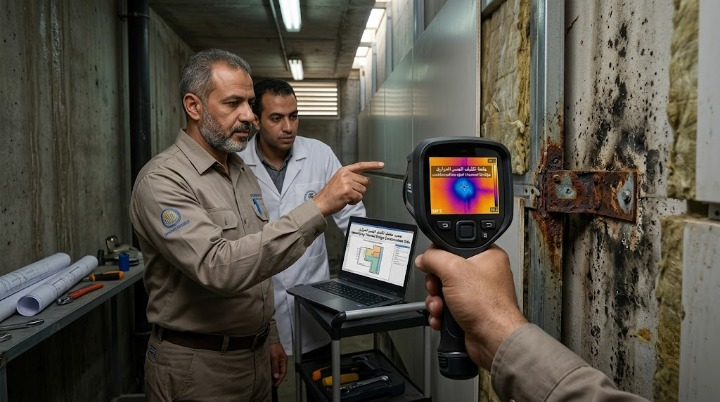
Building owners discovering mold and corrosion behind ACP facades during routine maintenance often trace the cause to thermal bridges at bracket locations that created condensation points accumulating damage over years.
Why Subframe Brackets Can Create Hidden Condensation Points
Metal subframe brackets connecting ACP panels to a building’s structure can conduct heat differently than the surrounding insulated wall assembly, creating a localized thermal bridge. At this bridge point, temperature differentials between interior and exterior conditions can drop below the dew point, causing condensation to form — invisible behind the facade, but capable of causing real damage over time.
Where This Risk Remains Undetected for Years
Because the condensation occurs behind the facade cladding, entirely out of view during normal building operation, this thermal bridging effect can accumulate moisture damage — corrosion, mold growth, insulation degradation — for years before any symptom becomes visible enough to prompt investigation.
Why This Damage Is Discovered Only Through Specific Investigation
Thermal bridge condensation damage typically comes to light only during a specific maintenance event that happens to expose the affected area, or once damage has progressed severely enough to become visible from the interior — meaning the underlying cause may have been active for a substantial period before detection.
Identifying Thermal Bridge Locations During the Design Phase
After explaining how ACP bracket thermal bridges create condensation risk, the fix is identifying thermal bridge locations and addressing them during design, before the facade is constructed and the risk becomes hidden behind cladding. Clad Cut V2’s thermal analysis module identifies thermal bridge locations and recommends thermal break solutions during the design phase, addressing the risk before it becomes an invisible, accumulating problem.
Validate your thermal bridge exposure — Audit Clad Cut V2’s thermal module.