
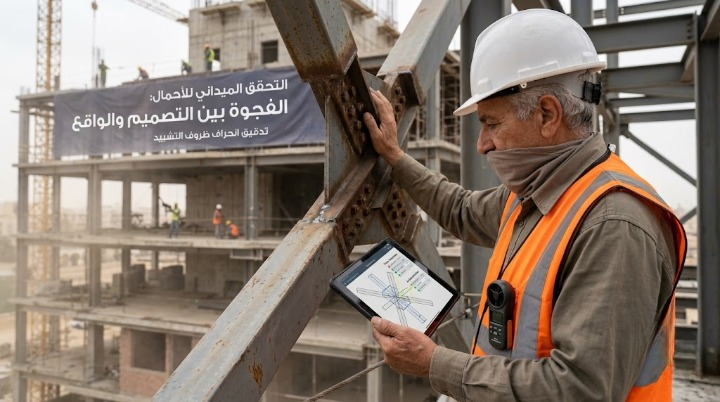
Relying on design-stage wind load calculations without verifying that as-built conditions match original assumptions can leave a structure’s documented compliance out of sync with what was actually constructed, once field changes and construction tolerances have accumulated.
Why As-Built Conditions Can Diverge From Design Assumptions
Wind load calculations performed during design are based on the drawings and specifications available at that stage. Construction, however, introduces its own tolerances, and field changes made during the build process — whether for constructability reasons or unforeseen site conditions — can shift the actual geometry away from what the original calculation assumed.
Where This Divergence Goes Unverified
Once a design-stage wind load report is approved, it is frequently treated as the final word on the structure’s wind compliance, with no subsequent step built into the process to verify that the as-built structure actually matches the assumptions that calculation relied on. Field changes accumulate through the construction process without a corresponding update to the wind load documentation reflecting those changes.
Why This Matters for Long-Term Structural Accountability
If a structure’s actual as-built geometry has drifted from its design-stage wind load assumptions — even through legitimate, individually reasonable field changes — the documented wind load compliance may no longer accurately describe the structure that was actually built. This gap typically remains invisible until a specific event, such as a forensic investigation or a future renovation, requires verifying that documentation and reality still align.
Validating Wind Loads Against Actual Current Conditions
After explaining how field changes and tolerances can drift a structure from its design-stage assumptions, the fix is treating as-built verification as a distinct step, separate from the original design-stage calculation. Wind Master’s recalculation capability supports validating wind loads against actual as-built conditions, allowing a structure’s documented compliance to be reconciled with what was genuinely constructed rather than what was originally assumed.
Validate your as-built assumptions — Audit for construction-stage drift.