
A louver system can look architecturally striking and still fail at its core job — blocking peak-sun heat gain — if its angle and depth were chosen for visual effect rather than derived from an actual solar study.
This guide explains how solar studies inform effective louver angle and depth, and why shading design disconnected from sun path analysis routinely underperforms regardless of how it looks on the elevation drawing.
How Do Solar Studies Inform Louver Design?
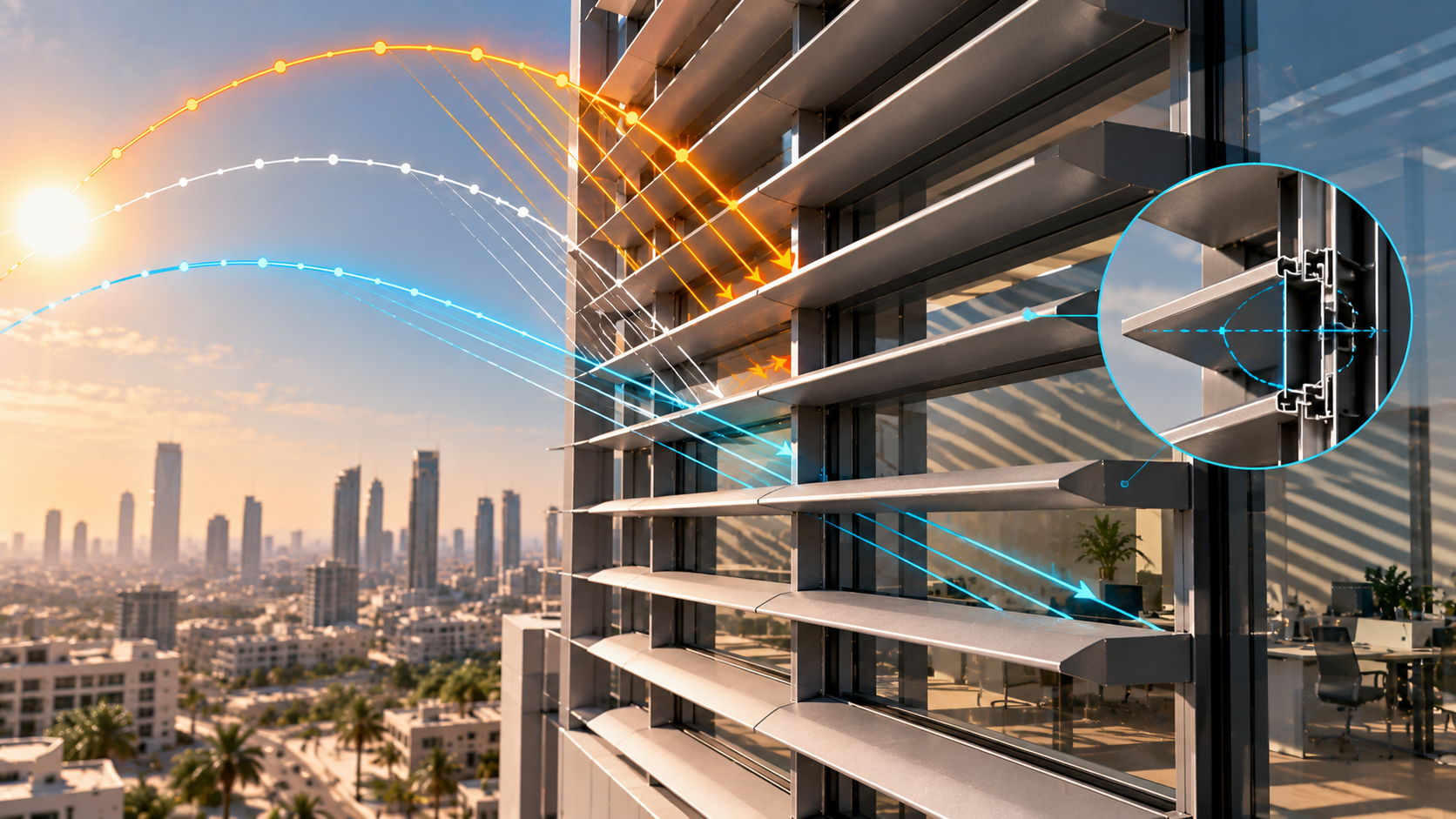
A solar study simulates the sun’s path across a building’s facade throughout the year, identifying peak solar heat gain angles. This data determines the correct louver angle, depth, and spacing needed to block unwanted heat while preserving daylight and view.
The Engineering Diagnosis
Sun angle changes meaningfully across seasons — the angle that produces peak heat gain in summer is not the same angle the building faces in winter. A louver system designed around a single assumed sun angle, rather than the full seasonal range, can perform well at one time of year and fail entirely at another, even though its physical appearance never changes.
This is precisely why aesthetics-only louver specification runs into trouble: a louver angle and depth chosen because it looks visually balanced on an elevation drawing has no inherent relationship to whether it actually blocks the sun angles that produce the most heat gain across the year.
From Diagnosis to Certainty
This is exactly where solar study data replaces visual guesswork with an actual performance basis for louver angle, depth, and spacing — designed against how the sun actually moves across the facade throughout the year, not a single assumed position.
DOME FDH’s Solar Study Service
DOME FDH’s Solar Study service simulates sun path and ray-fall across all seasons, determining the correct louver design and appropriate reflective cladding type based on how the building’s facade actually experiences solar exposure throughout the year.
The Grand Finale
A louver that looks correct on the drawing and a louver that actually blocks peak-sun heat gain are not automatically the same thing. Solar study data is what closes that gap — shading designed against real seasonal sun path, not visual assumption.
Request a Solar Study and get louver design based on how the sun actually moves across your facade, not a guess.
Engineered FAQ
Why can a louver look correct on the drawing but still underperform?
If its angle and depth were chosen for visual effect rather than derived from actual sun path data, it may fail to block peak-sun heat gain despite looking architecturally sound.
Does sun angle change enough across seasons to affect louver design?
Yes, which is why a solar study needs to simulate sun path across all seasons, not just a single point in time.
What does DOME FDH’s Solar Study service actually simulate?
It simulates sun path and ray-fall across all seasons to determine the correct louver design and appropriate reflective cladding type.