
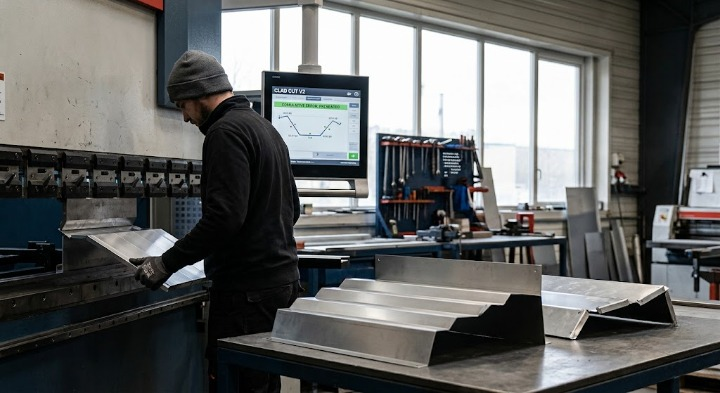
Fabricators producing multi-bend cassette panels can find that the final return flange misaligns because each previous bend introduced uncorrected error, making the cassette unfit for the subframe.
Why Multi-Bend Cassettes Compound Small Errors
Each individual bend in a cassette with multiple folds introduces a small dimensional deviation if the bending allowance calculation for that specific fold is not perfectly precise. Across several sequential bends, these small deviations do not cancel out — they accumulate, meaning the cumulative error at the final bend can be substantially larger than any single bend’s individual deviation would suggest.
Where This Compounding Effect Becomes a Real Problem
A cassette with several bends can appear correctly formed through the early folds, with dimensional drift only becoming apparent — or severe enough to matter — by the time the final return flange is formed, at which point the accumulated error may prevent the cassette from properly aligning with its intended subframe.
Why Sequential Calculation Matters More Than Individual Bend Precision
Even if each individual bend’s calculation is reasonably precise in isolation, the sequence in which bends are performed and how each bend’s material behavior affects the next fold’s starting condition requires accounting for cumulative material behavior across the full sequence, not just optimizing each bend independently.
Accounting for Cumulative Material Behavior Across the Fold Sequence
After explaining how multi-bend cassettes accumulate dimensional drift as each bend’s error compounds into the next, the fix is a sequential bend calculation that accounts for cumulative material behavior across the entire fold sequence, rather than treating each bend as an independent calculation. Clad Cut V2’s sequential bend calculator addresses this compounding effect directly, keeping the final dimension within the tolerance the subframe actually requires.
Validate your multi-bend sequencing — Audit Clad Cut V2’s fold calculations.