
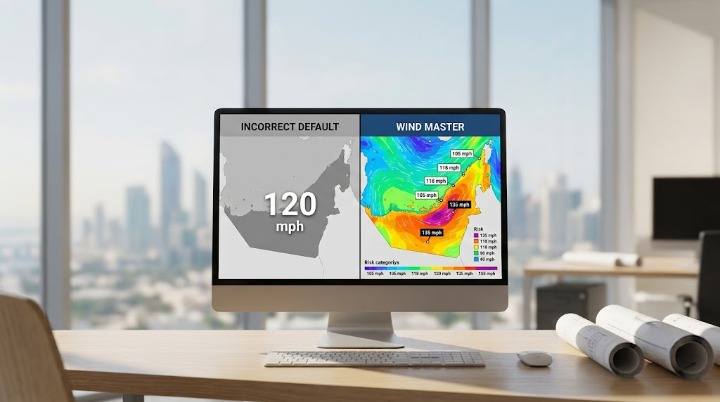
A single basic wind speed value applied across every project in a region assumes every site within that region experiences identical wind exposure. It does not — and that assumption cascades into every downstream pressure calculation the project depends on.
Why Basic Wind Speed Is Not a Single National Number
Basic wind speed varies by geographic region and is further adjusted by the project’s risk category, which reflects the consequences of structural failure for that specific building’s occupancy and use. A residential structure and a critical facility in the same city do not necessarily use the same design wind speed, even though they share a location.
Engineers who default to a single wind speed value they have used on previous projects — without re-verifying it against the current project’s specific location and risk category — risk carrying forward a value that no longer matches the actual site.
How This Assumption Enters a Project
This error is especially common when a firm works repeatedly within the same general region and develops an informal habit of using “the number we always use” for wind speed, rather than re-checking the applicable value for each new project’s specific coordinates and risk classification. Regional variation within a single country can be meaningful, and risk category adjustments compound that variation further.
Why a Single Wrong Input Invalidates the Entire Report
Basic wind speed is not one variable among many in a wind load calculation — it is the foundational input every subsequent pressure calculation is built on. An error here does not stay isolated to one section of the report; it propagates through every pressure value the report produces, because every downstream calculation multiplies from this single starting value.
Applying the Correct Regional Value Automatically
After showing how basic wind speed varies by region and risk category in ways that a single carried-forward value cannot capture, the fix is anchoring every calculation to the project’s actual location and classification rather than an engineer’s memory of a previous project’s value. Wind Master’s built-in wind speed reference applies the correct regional value automatically based on the project location and risk category entered, reducing repetitive manual lookup while preserving a traceable record for engineering review this foundational input on every new project.
Audit your wind speed inputs — Validate against regional requirements.