
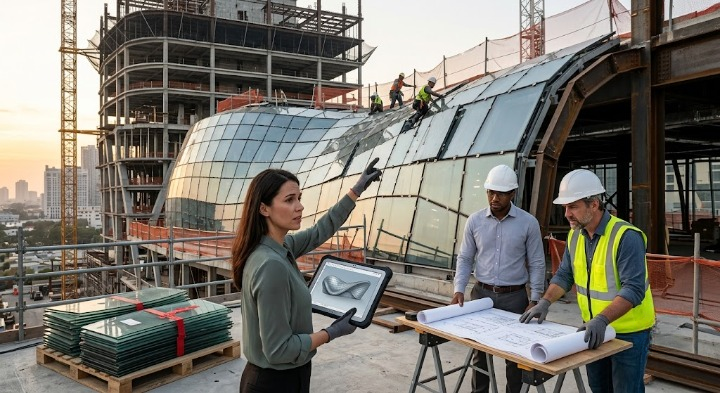
Finalizing a double-curved facade design before verifying whether the geometry can actually be rationalized into panels a fabricator can manufacture within reasonable cost and tolerance risks discovering, after approval, that the design is not actually buildable as conceived.
Why Striking Design Intent Does Not Guarantee Buildability
A double-curved facade concept can be visually compelling and architecturally approved while still representing a genuine fabrication challenge — the geometry that looks correct as a rendered surface may not translate cleanly into flat or single-curved panels that an actual fabricator can produce within normal cost and tolerance constraints.
Where the Gap Between Intent and Reality Appears
This gap typically surfaces once a facade team attempts to rationalize the approved concept into actual panelization — at which point it may become clear that achieving the design intent as originally conceived would require either an impractical number of unique panel types or fabrication techniques far outside standard cost expectations.
Why Discovering This After Approval Is Costly
A facade concept finalized and approved before rationalization feasibility is checked puts the project in a difficult position: either the design must be revised after stakeholders have already signed off on it, or the project absorbs significantly higher fabrication costs than were originally budgeted, to achieve geometry that was never actually verified as buildable within normal parameters.
Bridging Design Intent and Buildable Panel Output
After showing where architectural intent diverges from fabrication feasibility on complex geometries, the fix is verifying rationalization feasibility before the design is finalized, rather than discovering the gap only once fabrication planning begins. DASH’s computational facade rationalization is the process that bridges design intent and buildable panel output, checking feasibility early enough to inform the design rather than constrain it after the fact.
Consult with DASH’s team about rationalizing your facade geometry.