
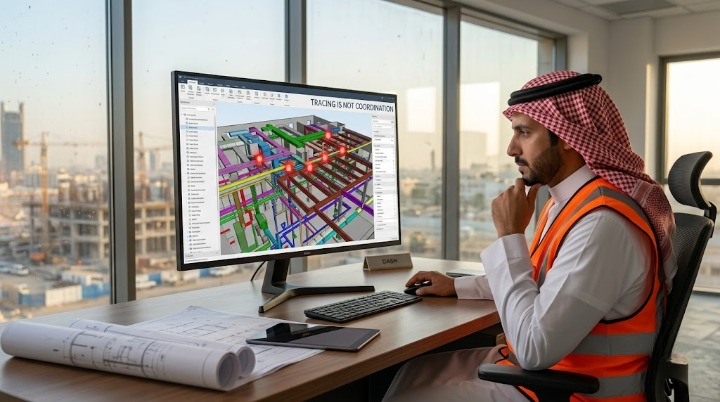
CAD tracing and BIM coordination are frequently conflated, but they solve fundamentally different problems at different project stages — an important distinction to make clear before comparing service offerings.
Two Capabilities Often Assumed to Be the Same
Geometry tracing — converting a 3D model or reference drawing into clean 2D CAD output — is a real and useful capability. It is not the same capability as BIM coordination, which requires a federated model integrating multiple disciplines together specifically to identify where their elements conflict. A service that performs one does not automatically perform the other.
Where This Confusion Enters Procurement Decisions
A project team engaging a service under the general label of “BIM support” may not distinguish between a tracing-focused offering and a genuine coordination offering — assuming that because a provider works with 3D models and produces professional output, they are performing the discipline-integration and clash detection that true coordination requires.
Why the Distinction Matters for Project Risk
A project relying on tracing services for what it believes is coordination-level oversight is carrying undetected cross-discipline risk, since geometry tracing was never structured to identify conflicts between disciplines in the first place.
Positioning Coordination as a Distinct, Discipline-Integrated Service
After clarifying the structural difference between geometry tracing and true model-based coordination, DASH’s Automated BIM Coordination is positioned as the discipline-integrated service, distinct from basic CAD tracing — helping project teams procure the right capability for the risk they are actually trying to manage.
Consult with DASH’s team to clarify your coordination requirements.