
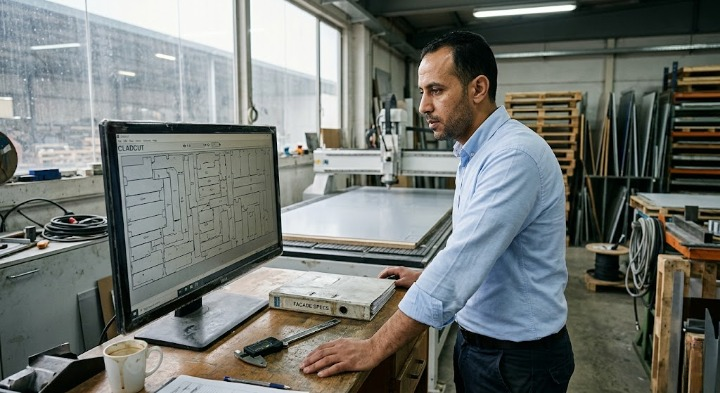
What is the best way to optimize ACP utilization? The most effective method for optimizing Aluminium Composite Panel (ACP) utilization relies on integrating algorithms that automatically transform complex 3D designs into 2D cutting layouts with millimeter precision. This scientific approach ensures a maximum Yield by strategically arranging parts to respect engineering constraints such as Grain direction and Kerf width, effectively reducing scrap to its absolute minimum.
The Volatile Cost Dilemma – Controlling the Unpredictable (The Pain Hook)
In a market where global aluminium prices fluctuate daily, facade fabrication shops face a brutal challenge in determining fixed project costs. While you cannot control the market price for brands like Alucobest, Alubond, or Alstrong, you can exert total control over the waste generated in your facility.
The uncertainty of not knowing the exact number of sheets required until the cutting process begins—Unpredictable Yields—is a high-stakes financial gamble. Professional manufacturers recognize that raw materials constitute 40% to 60% of total production costs. Consequently, a mere 5% improvement in optimization can translate into thousands of riyals saved per project. Master Aluminium Composite Panel (ACP) optimization to minimize scrap and improve yield on every sheet.
How does aluminium composite panel nesting minimize waste?
“Our algorithm is specifically tuned for aluminium composite panel nesting to handle grain direction.” > According to the principles of Design for Manufacturing (DfM), automation reduces waste through True-shape nesting. This technology allows for the mathematical interlocking and rotation of irregular shapes to utilize every square millimeter of the sheet. By minimizing the gaps between parts and optimizing cutting paths to reduce “empty head movement” (Air cutting), the system enhances productivity and ensures sustainable energy consumption.
Architectural Diagnosis – The Science of Nesting in Facade Cladding
Aluminium metal cladding is no longer a manual process; it is a science of spatial distribution. Factories that still rely on manual calculations or legacy software that fails to account for alco panel specificities are bleeding profit through Human Errors.
Engineering data indicates that integrated software reduces programming time from hours to minutes, liberating your engineers to focus on structural innovation rather than repetitive data entry. When evaluating an aludecor acp panel price, you must calculate the cost based on the Actual Yield rather than just the price per square meter. A “cheap” sheet with high waste is significantly more expensive than a premium panel paired with intelligent nesting.
The Cornerstone – Why “Grain Direction” is Non-Negotiable
In ACP panels, maintaining strict Grain direction control is vital for both structural integrity and visual uniformity. A deviation in orientation leads to inconsistent light reflection across the facade, resulting in a distorted, unprofessional final appearance. The CladCut system is engineered to respect these constraints automatically, preventing random part rotation that would compromise the facade’s aesthetic while still hunting for the maximum possible nesting density within those boundaries.
From Resource Waste to Profit Sovereignty
You cannot control global market volatility, but you can control the efficiency of your internal operations. In the competitive landscape of 2026, the gap between a profitable project and a loss is often found in the scrap bin.
“Aluminium composite panel nesting software transforms CAD geometry into production-ready layouts that respect all manufacturing constraints.”
Engineering Finale – Reclaiming Control Over Your Inventory
Precision is not an option in 2026; it is a necessity for survival. A smart factory is one that knows exactly how many sheets will be consumed before the first machine starts running. By centralizing your fabrication logic, you eliminate the “hidden costs” of scrap and turn your inventory into a strategic asset.
Calculate Your Material Savings
Engineered FAQ
- How does nesting affect the life of cutting tools?
By optimizing cutting paths and reducing unnecessary travel distance, the wear on router bits or laser heads is significantly decreased. This extends their operational lifespan and lowers overall maintenance costs.
- Can the system handle remnants (Scrap pieces)?
Yes. Advanced software allows you to track and reuse Remnants from previous projects, integrating them into new work orders to minimize total material waste over time.
- What is the expected ROI from ACP automation?
Typically, manufacturers see a Yield increase of up to 20% and an 80% reduction in file preparation time, resulting in an immediate and measurable boost to net profit margins.