
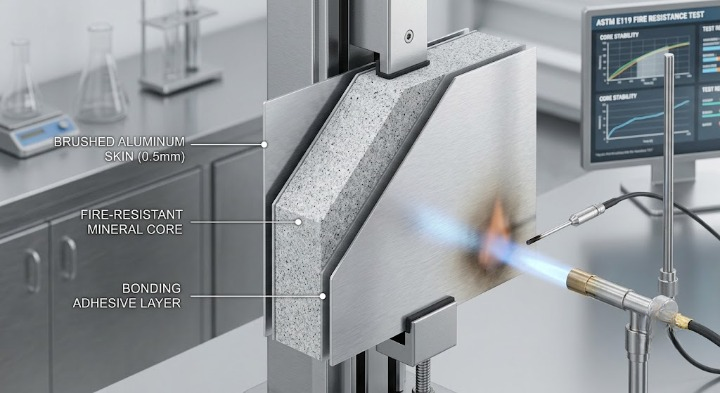
Installing non-compliant, flammable core materials is not just a technical error; it is a legal and financial time bomb. In the modern construction landscape, project rejection by consultants and catastrophic legal penalties are the inevitable results of bypassing fire safety codes. This technical guide clarifies ACP fire resistance ratings and core safety, ensuring your project meets global compliance standards and eliminates the risk of non-compliant cladding.
How is ACP fire resistance classified by core type?
According to CladCut’s material safety verification protocols, fire resistance is classified based on the chemical and mineral composition of the core:
- FR (Fire Retardant) Core: Composed of approximately 70% mineral filling, typically achieving a B-s1, d0 classification.
- A2 Core (Non-combustible): A superior mineral core containing over 90% non-combustible material, achieving an A2-s1, d0 rating.
- LDPE Core: Pure Low-Density Polyethylene; highly flammable and strictly prohibited in high-rise buildings under the Saudi Building Code (SBC) and international safety standards.
The Engineering Diagnosis – ASTM E84 and the Physics of Mineral Cores
In facade engineering, cost is secondary to compliance. The molecular difference between FR and A2 cores determines how a building responds during a fire event. Under ASTM E84 testing, the flame spread and smoke development indices are measured with surgical precision. While FR cores are designed to retard fire, A2 cores are classified as non-combustible, making them mandatory for high-rise structures where vertical fire spread is a critical risk.
Selecting a mineral core cladding is a mandate dictated by building height and structural function. Relying on manual verification or outdated documentation is a gamble with human life and institutional liability. Professional compliance requires a strict adherence to these fire-rated classifications to ensure the architectural integrity of the envelope.
Transitioning from Manual Chaos to Digital Certainty
True fire safety begins with the accuracy of your specification and the tracking of your inventory. If you are still relying on physical labels or memory to distinguish between PE and FR cores in a busy factory, you are inviting a catastrophic liability. Integrating your [aluminum composite panel] data into a digital workflow is the only way to ensure every piece installed matches the certified shop drawings without the risk of manual error.
CladCut and Bondify – The Guardians of Material Compliance
DomApp’s ecosystem is engineered to solve the fire-safety traceability crisis. Bondify provides a central “Source of Truth” for every aluminum composite panel order, tracking original mill test certificates and fire-rating reports from procurement to installation.
Simultaneously, CladCut revolutionizes the shop floor by classifying Scrap based on its specific core type. This prevents the accidental mixing of flammable PE remnants with certified FR or A2 materials during the fabrication process. The ROI of this integration is clear: absolute peace of mind and the elimination of legal kiting. We sell technical certainty, ensuring your facade is a shield, not a hazard.
The Grand Finale – Safety as a Strategic Investment
Safety is non-negotiable. In the cladding industry, wasting time on manual compliance is an invitation to failure. By automating your material verification and nesting processes, you transform fire safety from a burden into a competitive advantage. Protect your future, your projects, and your profits by choosing engineered certainty.
Engineered FAQ
Can FR panels be used in high-rise skyscrapers?
This depends on local codes; however, many jurisdictions, including the SBC, mandate A2 non-combustible cores for buildings exceeding a specific height threshold.
How do I visually distinguish between PE and FR cores?
While color coding is often used, visual inspection is unreliable. You must rely on certified ASTM test reports and digital traceability to ensure the material matches the specification.
Does CladCut support grain direction tracking for fire-rated panels?
Yes. CladCut maintains visual consistency by tracking grain direction while simultaneously enforcing the specific technical constraints of FR and A2 materials.