
Workshop owners interested in nesting optimization but concerned that adopting new software will disrupt established workflows may hesitate to move forward even when the underlying value case is clear.
Why Adoption Concern Is a Legitimate Consideration, Not an Excuse
A workshop’s concern about production disruption during software adoption reflects a genuine operational risk — a poorly managed implementation could indeed slow down production during a transition period, and this concern deserves a real answer rather than being dismissed as simple resistance to change.
Where This Concern Typically Originates
Experienced operators who have developed efficient habits around an existing manual process may reasonably worry that a new system will initially slow them down during a learning period, even if that system offers genuine long-term efficiency gains once fully adopted.
Why a Structured Implementation Addresses This Concern Directly
The disruption risk associated with software adoption is not inherent to the software itself — it depends heavily on how the implementation is structured, whether training is adequate, and whether the rollout is phased in a way that does not require the workshop to halt existing production during the transition.
A Guided Onboarding Designed for Workshops That Cannot Afford Downtime
After mapping the implementation process from installation through pilot project to full rollout, the fix is a structured onboarding process specifically designed to avoid production disruption.
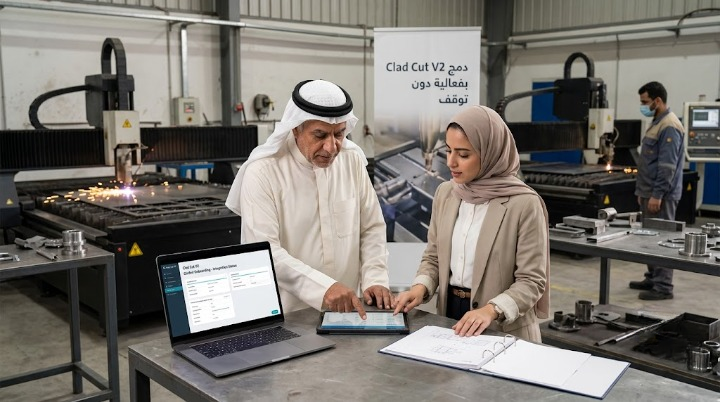
Clad Cut V2’s guided onboarding designed for workshops that cannot afford production downtime, addressing the legitimate adoption concern directly rather than asking workshops to simply accept the risk.
Consult with Clad Cut V2’s onboarding team about your implementation plan.