
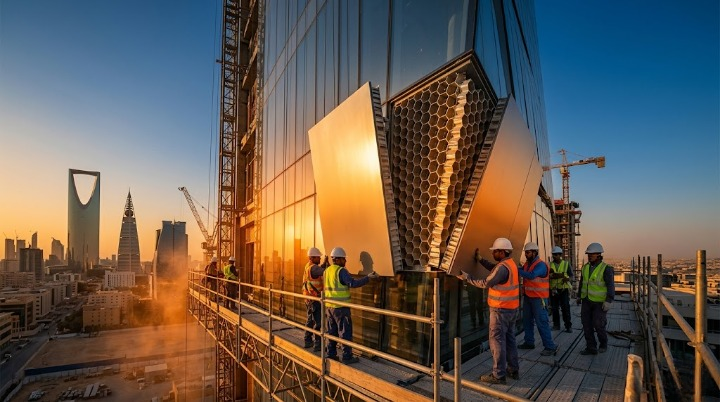
Thermal insulation is one of the fundamental elements in modern building design, playing a pivotal role in improving energy efficiency and providing a comfortable indoor environment. It works by reducing heat transfer between the inside and outside of buildings, helping to maintain balanced temperatures and reducing reliance on heating and cooling systems.
In Saudi Arabia, where temperatures reach extremely high levels during the summer, thermal insulation becomes essential to reduce energy consumption and achieve thermal comfort. The use of advanced building materials, such as HONEYCOMB panels, offers effective solutions to meet these goals, especially in light of modern trends toward green building and sustainability.
What Are HONEYCOMB Panels?
HONEYCOMB panels are advanced building materials characterized by their unique structural design, resembling a honeycomb. These panels consist of two durable outer layers surrounding an inner cellular core, providing a combination of strength and lightweight properties. They are typically made from materials such as aluminum or fiber-reinforced plastic, making them resistant to corrosion and moisture.
How Do HONEYCOMB Panels Work in Thermal Insulation?
The principle behind HONEYCOMB panels in thermal insulation lies in their structural design, which minimizes heat transfer. The inner cellular core acts as a barrier to heat flow, while the air distribution within the panels helps reduce heat loss. Compared to traditional materials like rock wool or polyurethane, HONEYCOMB panels offer superior thermal insulation performance with less weight.
Benefits of Using HONEYCOMB Panels in Thermal Insulation
- Reduced Energy Consumption: HONEYCOMB panels help lower heating and cooling costs due to their high thermal insulation efficiency.
- Improved Indoor Temperature Control: They provide a comfortable indoor environment year-round.
- Protection of Structural Integrity: They reduce the impact of harsh weather conditions on buildings.
- Enhanced HVAC Efficiency: They improve the performance of heating and cooling systems by reducing thermal loads.
Comparison Between HONEYCOMB Panels and Traditional Insulation Materials
HONEYCOMB panels offer higher thermal insulation performance compared to rock wool and polyurethane, with less weight and greater sustainability. The materials used in their manufacturing are eco-friendly and recyclable, making them an ideal choice for green projects.
The Role of HONEYCOMB Panels in Achieving Green Building Standards
HONEYCOMB panels contribute to reducing carbon emissions by improving energy efficiency in buildings. They also help achieve sustainable building certifications such as LEED and BREEAM, enhancing project value and minimizing environmental impact.
How to Improve Thermal Insulation Using HONEYCOMB Panels
- Select the Appropriate Thickness: Choose panel thickness based on project requirements.
- Combine with Other Insulation Materials: Enhance performance by integrating additional insulation materials.
- Optimal Installation Methods: Ensure there are no gaps to maximize insulation efficiency.
The Impact of Environmental Factors on HONEYCOMB Panels’ Performance
HONEYCOMB panels are highly resistant to moisture and corrosion, making them suitable for various climatic conditions. However, the effects of extreme temperatures on insulation performance should be considered.
Cost of Thermal Insulation Using HONEYCOMB Panels
Although the initial cost of HONEYCOMB panels may be higher than traditional materials, the return on investment is significant due to reduced energy bills over the long term.
Common Applications of HONEYCOMB Panels in Thermal Insulation Projects
HONEYCOMB panels are used in residential and commercial buildings, industrial facilities, modern building facades, and ventilation systems.
Steps for Installing HONEYCOMB Panels for Optimal Thermal Insulation
- Surface Preparation: Clean the surface thoroughly before installation.
- Choosing the Installation Method: Select the appropriate method based on project specifications.
- Ensuring No Gaps: Avoid gaps to ensure optimal thermal insulation.
Maintenance of HONEYCOMB Panels
Regular cleaning is required without affecting performance, and installation points and adhesives should be inspected periodically.
How Do HONEYCOMB Panels Enhance User Comfort in Buildings?
HONEYCOMB panels provide a comfortable living and working environment due to their high thermal and acoustic insulation efficiency.
Thermal Insulation Regulations and Standards in Saudi Arabia
Saudi building codes impose strict requirements for thermal insulation, including the use of approved insulation materials and adherence to energy efficiency standards.
Future Trends in Thermal Insulation Using HONEYCOMB Panels
HONEYCOMB panel technology continues to evolve, with advancements in materials and engineering designs, as well as new applications of artificial intelligence in evaluating thermal insulation performance.
Frequently Asked Questions About HONEYCOMB Panels and Thermal Insulation
- How do HONEYCOMB panels reduce energy consumption?
They minimize heat transfer between the inside and outside of buildings. - Do they provide better insulation than traditional materials?
Yes, they offer higher performance with less weight. - What is the appropriate thickness?
It depends on project requirements. - Can they be used in all types of buildings?
Yes, they are suitable for residential, commercial, and industrial buildings.
HONEYCOMB panels are an innovative and effective solution in the field of thermal insulation, combining durability, lightweight properties, and high insulation efficiency. Thanks to their numerous benefits, these panels have become an ideal choice for engineers and developers in Saudi Arabia to create more sustainable and energy-efficient buildings.
By incorporating HONEYCOMB panels into building designs, Saudi Arabia can take significant steps toward achieving energy efficiency, sustainability, and improved living standards.