
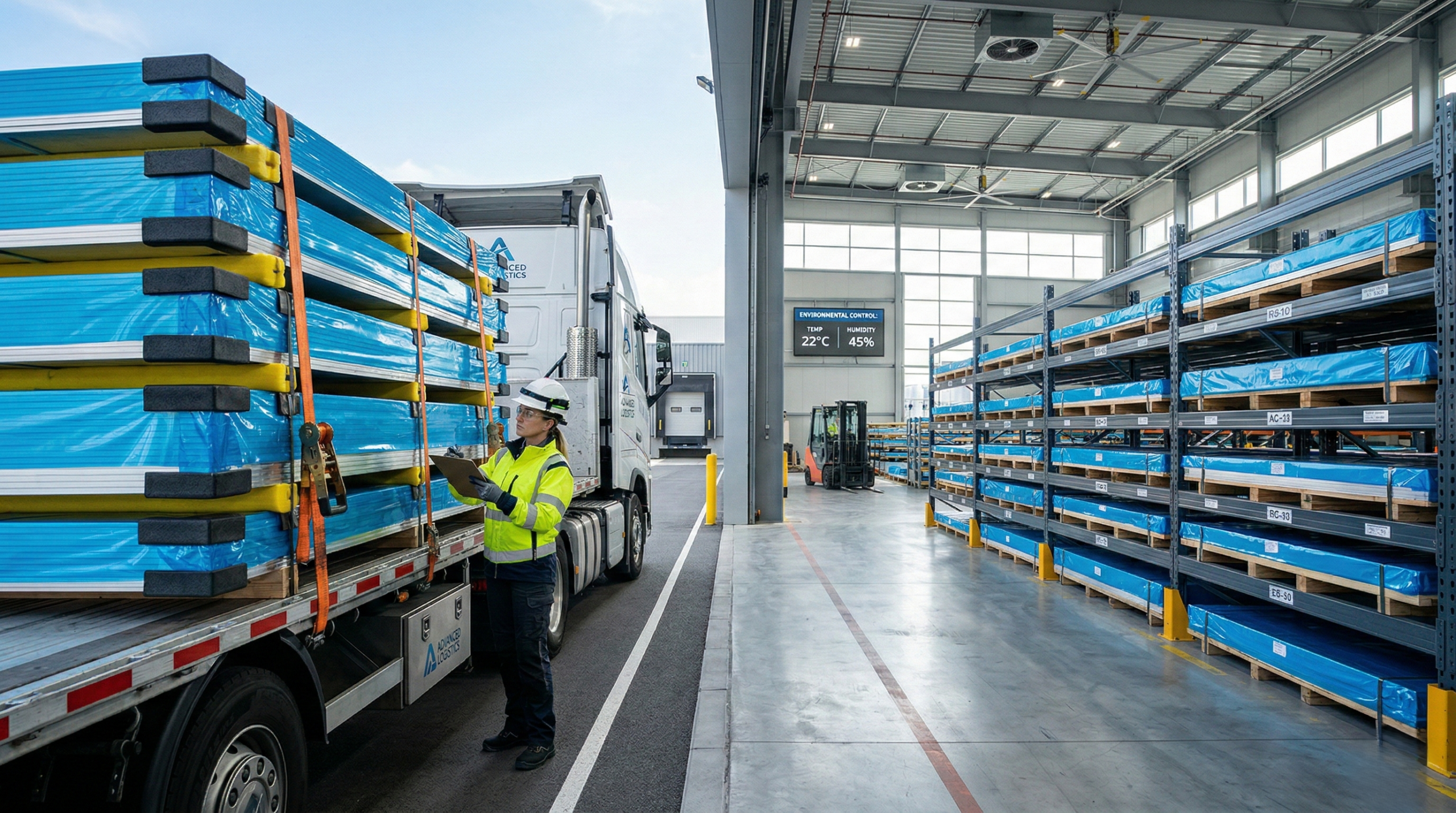
The Importance of Proper Transportation and Storage of Aluminum Sheets
Aluminum sheets are essential materials used in various industries, including construction, decoration, and heavy industries. To ensure these sheets remain in optimal condition, precise transportation and storage methods must be followed. Aluminum is a sensitive material that can be affected by scratches, bending, and even corrosion if not handled properly.
Impact of Improper Storage and Transportation on Aluminum Quality and Applications
Poor storage or improper transportation can cause more than surface damage—it can lead to a loss of key aluminum properties, such as durability and thermal efficiency. Proper storage and transportation are not just logistical steps; they are critical factors in ensuring aluminum is used effectively in various projects.
What Are Aluminum Sheets?
Definition of Aluminum Sheets
Aluminum sheets are flat plates made from pure aluminum or combined with other materials to enhance their properties. They are known for their strength, lightweight nature, and ease of manufacturing.
Physical and Chemical Properties of Aluminum
- Lightweight: Facilitates easy transportation and installation.
- Durability: Resistant to corrosion and environmental conditions.
- Thermal Conductivity: Ideal for thermal insulation.
- Malleability: Easily shaped to meet various design requirements.
Uses of Aluminum Sheets in Different Industries
- Construction: Used in cladding, window frames, and doors.
- Packaging: Commonly used in food packaging.
- Heavy Industries: Utilized in aircraft and automobile manufacturing.
The Importance of Proper Transportation and Storage of Aluminum Sheets
How Transportation and Storage Preserve Aluminum Quality
Securing proper transportation and storage methods prevents scratches, deformation, and damage, ensuring that aluminum sheets remain ready for use without requiring additional repairs.
Factors That Cause Aluminum Damage During Transportation and Storage
- Friction between sheets: Leads to surface scratches.
- Humidity exposure: Can cause aluminum corrosion.
- Heavy loads: May result in bending and warping.
- Poor storage arrangement: Incorrect stacking inside boxes may cause bending or even complete damage.
Effect of Poor Storage on Aluminum Performance and Lifespan
Storing aluminum in unsuitable environments, such as humid or high-temperature areas, can gradually degrade its properties, shortening its lifespan and reducing efficiency in different applications.
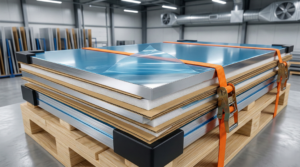
Best Practices for Transporting Aluminum Sheets
Preparing Aluminum Sheets for Transportation
- Clean the sheets to remove dust or contaminants.
- Wrap sheets in protective materials such as plastic covers or padded fabric.
- Use separators between sheets to prevent friction damage during transport.
Choosing the Right Transportation Methods
- Use trucks with a flat surface for even weight distribution.
- Secure aluminum sheets properly with strong straps to prevent movement.
Protective Materials to Reduce Damage During Transportation
- Scratch-resistant plastic covers to shield the surface.
- Foam layers or corrugated cardboard between sheets for added protection.
Tips to Prevent Bending and Scratching During Transportation
- Avoid stacking sheets on top of each other without separators.
- Distribute weight evenly across the transport surface.
- Use appropriate lifting equipment to load and unload sheets safely.
Safe Storage Techniques for Aluminum Sheets
Selecting the Right Storage Location
- Choose a dry, cool location away from moisture and direct heat.
- Use well-ventilated warehouses to protect aluminum from environmental elements.
Optimal Temperature and Humidity Levels for Aluminum Storage
- Maintain a moderate temperature between 20-25°C.
- Keep humidity levels below 50% to prevent corrosion.
The Importance of Proper Ventilation in Storage Facilities
Good ventilation prevents moisture buildup, which protects aluminum from oxidation and corrosion.
Organized Storage to Minimize Pressure and Overcrowding
- Store aluminum sheets horizontally or at an angle on dedicated racks.
- Avoid stacking excessive quantities to prevent overpressure.
Types of Protective Materials Used in Transportation and Storage
Scratch-Resistant Plastic Covers
These covers protect the aluminum’s surface from damage during transportation and storage.
Aluminum Transport Covers
Special covers provide additional protection from dust, moisture, and environmental factors.
Padded Separators Between Sheets
These separators prevent friction and reduce the risk of scratches.
Common Mistakes in Transporting and Storing Aluminum Sheets
1. Not Using Sufficient Protective Materials
This can result in surface damage and loss of aluminum quality.
2. Storing Aluminum in Improper Environments
Exposure to humidity and outdoor elements can accelerate corrosion.
3. Neglecting Proper Securing During Transport
If sheets move freely, they can suffer from scratches, bending, or breakage.
4. Ignoring Regular Maintenance for Stored Aluminum
Dust accumulation and moisture exposure over time can affect the quality of aluminum.
How to Inspect Aluminum Sheets After Transportation or Storage
Steps to Ensure Aluminum Sheet Quality
- Examine the surface for any scratches, cracks, or dents.
- Check for warping by measuring sheet flatness.
Handling Minor Damages
- Polish minor scratches using special aluminum polishing tools.
- Use thermal pressing techniques to fix slight bends.
The Importance of Regular Inspections to Maintain Quality
Routine quality checks help detect issues early and address them before they escalate.
Safety Standards for Transporting and Storing Aluminum Sheets
- Train workers on proper aluminum handling techniques.
- Use appropriate lifting and transport equipment to prevent accidents.
- Follow manufacturer guidelines for safe transportation and storage.
Frequently Asked Questions (FAQs)
1. How Long Can Aluminum Sheets Be Stored Without Degradation?
When stored in optimal conditions, aluminum can maintain its quality for up to six months, considering the validity of protective coatings to prevent adhesion and deterioration.
2. Can Standard Transportation Methods Be Used for Aluminum?
It is preferable to use dedicated transport systems to minimize damage risks.
3. What Are the Best Protective Materials to Prevent Scratches?
Plastic covers and foam layers are the most effective in reducing friction and scratches.
4. How Can I Verify a Supplier’s Aluminum Storage Quality?
Request quality certification and inspect their storage and transport practices.
5. What Is the Cost of Modern Storage Systems?
Costs vary based on size and features, but they are considered a long-term investment to maintain aluminum quality.