
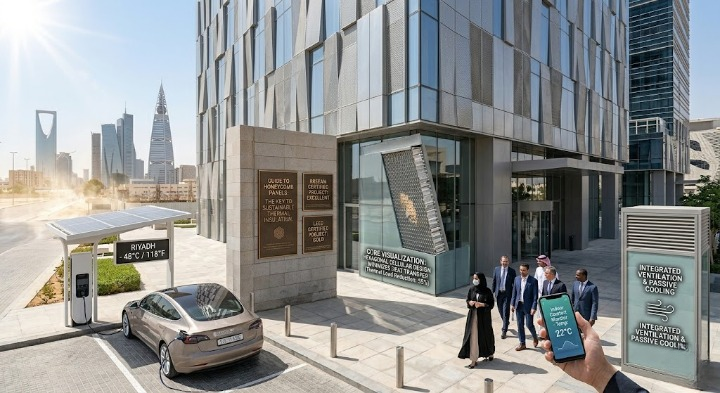
Durability is one of the most critical factors to consider when selecting building materials, especially in harsh environments like the desert climate of Saudi Arabia. HONEYCOMB panels, with their unique design and exceptional structural properties, are among the most efficient materials for withstanding environmental challenges. These panels not only provide high resistance to heat, moisture, and corrosion but also contribute to enhancing sustainability in architectural projects. In this article, we will explore in detail how HONEYCOMB panels withstand harsh conditions and why they are an ideal choice for engineers in the field of cladding.
What Are HONEYCOMB Panels?
HONEYCOMB panels consist of a cellular structure resembling a honeycomb, offering high mechanical strength while being lightweight. These panels are made from various materials such as aluminum, reinforced plastic, and fiberglass, making them versatile and adaptable to different environmental conditions. Compared to traditional materials like steel or solid aluminum, HONEYCOMB panels exhibit higher corrosion resistance and better load distribution.
How Do HONEYCOMB Panels Withstand Extreme Climate Changes?
In desert climates like Saudi Arabia, where temperatures soar during the day and drop significantly at night, HONEYCOMB panels demonstrate exceptional adaptability. The cellular structure of these panels allows for even heat distribution, reducing deformations caused by expansion and contraction. Additionally, the materials used in their manufacturing are heat-resistant, making them ideal for areas with extreme temperature fluctuations.
Corrosion and Moisture Resistance of HONEYCOMB Panels
Moisture and corrosion are among the biggest challenges for building materials, especially in coastal or high-humidity areas. HONEYCOMB panels are designed with corrosion-resistant components and coated with protective layers that enhance their moisture resistance. Compared to traditional metallic materials like steel, these panels perform better in humid environments without requiring frequent maintenance.
Load-Bearing and Impact Resistance of HONEYCOMB Panels
Thanks to their cellular design, HONEYCOMB panels have an exceptional ability to withstand mechanical stress and impacts. The internal structure of these panels evenly distributes loads, reducing the likelihood of cracking or bending. This makes them ideal for structures exposed to high pressure or frequent vibrations.
How Do HONEYCOMB Panels Handle Strong Winds and Storms?
In areas with strong winds like Saudi Arabia, the panels’ resistance to wind pressure is a decisive factor. The design of HONEYCOMB panels allows for even distribution of wind pressure, minimizing the risk of damage. Additionally, advanced installation techniques ensure their stability even in elevated locations.
Fire Resistance: Are HONEYCOMB Panels Safe?
HONEYCOMB panels undergo fire resistance testing according to international standards. The materials used in their manufacturing, such as aluminum and fiberglass, provide high resistance to ignition. Furthermore, fire-resistant coatings are added to enhance safety in emergencies.
Performance of HONEYCOMB Panels in Harsh Industrial Environments
In industrial facilities exposed to harsh chemicals, HONEYCOMB panels exhibit high resistance to chemical corrosion. The materials used in their manufacturing can withstand exposure to acids and alkalis without performance degradation, making them an ideal choice for factories and industrial plants.
Effect of Prolonged Exposure to UV Rays
In sun-drenched regions like Saudi Arabia, resistance to UV rays is crucial. HONEYCOMB panels are designed with protective layers that reduce the impact of UV radiation, maintaining their durability over extended periods.
Techniques to Enhance the Durability of HONEYCOMB Panels
Recent innovations in the manufacturing of HONEYCOMB panels include the use of new materials and advanced coatings that increase their resistance to corrosion and moisture. Additionally, chemical treatments are applied to protect the internal materials from damage.
Maintenance of HONEYCOMB Panels and Extending Their Lifespan
Regular maintenance is essential for preserving the performance of HONEYCOMB panels. Periodic cleaning and inspection of protective layers can extend their lifespan and maintain their efficiency.
Cost vs. Lifespan: Are HONEYCOMB Panels Worth the Investment?
Although the initial cost of HONEYCOMB panels may be higher compared to traditional materials, their long lifespan and reduced maintenance needs make them a smart long-term investment.
Global Quality Standards for HONEYCOMB Panels
HONEYCOMB panels undergo rigorous testing according to international standards, ensuring their performance in harsh conditions. In Saudi Arabia, the quality of these panels is evaluated before their use in large-scale projects.
HONEYCOMB panels are an ideal choice for architectural projects in harsh environments like Saudi Arabia. Thanks to their unique design and advanced materials, these panels offer high resistance to heat, moisture, corrosion, and pressure, making them a sustainable and cost-effective solution.
By incorporating HONEYCOMB panels into building designs, engineers can ensure durability, sustainability, and efficiency, even in the most challenging environments.