
In the enterprise landscape of 2026, a mobile application is often the primary touchpoint for high-stakes business operations. However, many organizations struggle with high uninstall rates and poor user retention because their current mobile experience feels outdated, loads slowly, and crashes frequently across fragmented device ecosystems.
When an app fails in a professional context, it doesn’t just lose a user—it disrupts an entire workflow, creates data silos, and erodes corporate trust. Choosing the right mobile application development company is the difference between a high-performing strategic asset and a lingering technical liability.
Why Hire a B2B-Specific Development Partner?
A B2B mobile application development company specializes in complex, high-security ecosystems that prioritize operational efficiency over retail gimmicks. They architect scalable mobile architecture, ensuring a seamless data flow between field teams and backend systems.
Unlike generalist firms, B2B specialists understand enterprise-grade app lifecycle management, delivering tools designed to solve specific industrial bottlenecks with millimeter precision.
Native Engineering vs. PWA: A Strategic Choice
While the “speed to market” of web-based solutions is tempting, the technical requirements of the enterprise often dictate the stack:
| Feature | Native Application (iOS/Android) | Progressive Web App (PWA) |
| Performance | High; utilizes full CPU/GPU power. | Moderate; runs within a browser engine. |
| Offline Capability | Robust; complex local data syncing. | Limited; basic caching support. |
| Hardware Access | Deep (Sensors, Biometrics, BLE). | Restricted to standard web APIs. |
| Scalability | High; built for complex architectures. | Moderate; best for simpler workflows. |
Field Operations and Technical Coordination
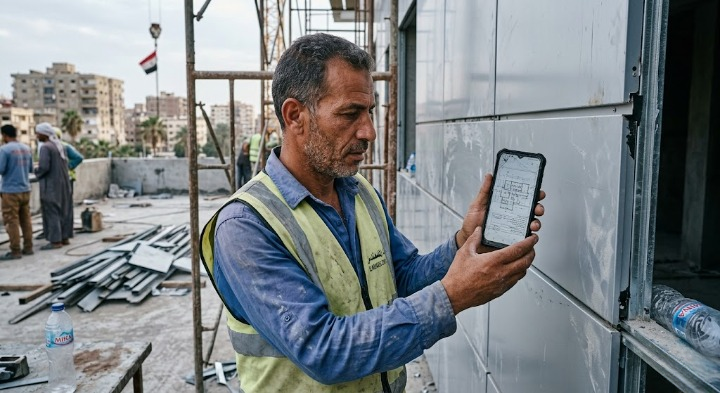
The value of the best mobile application development company is most visible when software meets the physical world. In heavy industries, mobile apps are essential tools for Technical Coordination between various parties.
Consider field engineers managing aluminium metal cladding projects. These professionals use mobile applications to verify technical specifications, check tolerances, and log installation progress directly on-site. When the software is architected correctly, it eliminates the “human lag” and data-entry errors that lead to project delays.
If the application is clunky or crashes during a critical site inspection, the cost is measured in hours of lost production and material waste.
The SDLC and Mobile App Deployment
To ensure long-term stability and a high ROI, your partner must follow a rigorous App Lifecycle Management process:
- Iterative Sprints: Ensuring every feature is validated before the next phase of mobile product development begins.
- Automated QA: Running code through thousands of device simulations to prevent crashes.
- Streamlined Deployment: Utilizing CI/CD pipelines to push updates without interrupting the user’s workday.
The Engineering of Speed
User frustration is a direct result of technical friction. We measure the efficiency of an interface ($E$) by its response time ($T$):
E \propto \frac{1}{T_{load} + T_{interaction}}
We engineer applications to target $T < 1s$, ensuring your team stays productive and your clients stay engaged. By prioritizing clean code, we turn your mobile presence into a reliable engine for growth.
View Our Mobile Portfolio
Stop settling for clunky, unreliable mobile tools. Partner with a leading mobile application development company that understands the rigor of B2B operations and the necessity of seamless native performance.