
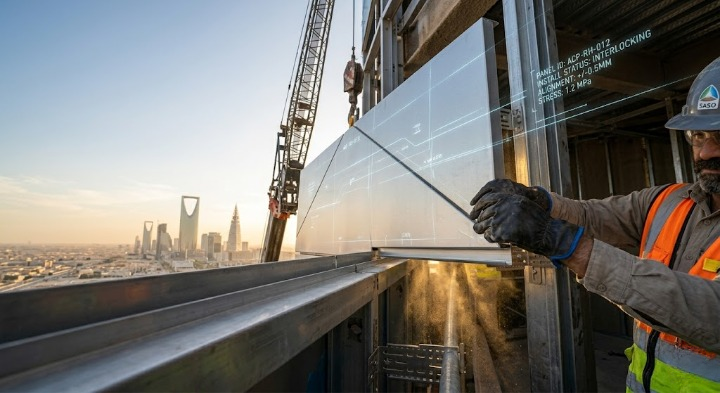
Hook Technique for Installing Aluminum Panels
Aluminum panels are essential materials in cladding projects (building exterior facades) due to their lightweight, high corrosion resistance, and ability to withstand various weather conditions. However, the success of any project largely depends on the installation method used. The hook technique emerges as one of the most effective and rapid methods for installing aluminum panels.
This guide provides a detailed explanation of how to use the hook technique to securely and durably install aluminum panels, focusing on its advantages, challenges, and industry standards.
Understanding the Hook Technique in Aluminum Panel Installation
What is the Hook Technique?
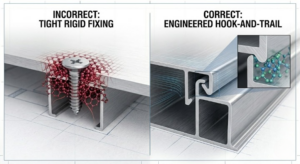
The hook technique is an installation method that relies on metal hooks being fixed onto supporting structures, allowing aluminum panels to be hung on them. This method enables faster installation and minimizes excessive drilling, making it ideal for cladding projects.
How Does the Hook Technique Work?
This technique involves securing metal hooks onto the building’s support structure, then interlocking aluminum panels onto them. The panels are secured using screws or special fasteners, ensuring stability without the need to fix each panel separately.
Components of the Hook-Based Installation System
- Metal hooks: Made of rust-resistant materials capable of handling heavy loads.
- Aluminum panels: Designed to fit with hook shapes.
- Screws and fasteners: Used to secure panels onto the hooks.
- Insulation materials: Sometimes used to enhance thermal and acoustic insulation.
Types of Hooks Used
- Fixed hooks: Used in medium-load projects.
- Adjustable hooks: Allow for spacing adjustments between panels.
- Wind-resistant hooks: Designed to withstand strong winds, especially in coastal areas.
Tools and Equipment Required for Installation
Essential Tools List
- Electric drill: For making holes in the support structure.
- Wrench: To secure hooks and screws.
- Measuring tape: Ensures precise placement of installation points.
- Laser level: For ensuring panel alignment.
- Aluminum cutting tools: Such as an electric saw.
Special Equipment for Positioning Hooks
- Distance measuring devices: To ensure equal spacing between hooks.
Suitable Screws and Fasteners
- Stainless steel screws: Ensure durability.
- Quick-installation nails: Facilitate faster assembly.
Safety Equipment to Use
- Helmet and gloves: To protect workers from injuries.
- Safety shoes: To prevent slipping.
- Protective glasses: To shield eyes from debris.
Stages of Installation Using the Hook Technique
1. Preparation and Planning Before Installation
- Surface inspection: Ensure the support structure is ready for installation.
- Identifying installation points: Use measuring devices to mark exact locations.
- Choosing the appropriate hook type: Based on panel type and structure.
2. Installing Hooks onto Support Structures
- Securing hooks: Using screws and fasteners.
- Spacing determination: Ensuring balanced weight distribution.
- Alignment check: Using a laser level.
3. Attaching Aluminum Panels onto Hooks
- Hanging panels: Interlocking them onto the hooks.
- Securing panels: Using screws.
- Applying insulation materials: To improve thermal and soundproofing performance.
4. Inspection and Evaluation of the Installation
- Testing installation strength: Ensuring panel stability.
- Checking gaps: Between panels.
- Identifying and fixing issues immediately.
Advantages of the Hook Technique in Aluminum Panel Installation
- Faster installation: Compared to traditional methods.
- Reduced need for drilling: Lowering costs.
- Weather resistance: Withstands wind and rain.
- Easy maintenance: Panels can be removed and replaced effortlessly.
Comparison of the Hook Technique with Other Installation Methods
Differences Between Hook Technique and L-Bracket Installation
- Hook installation: Faster and more flexible.
- L-bracket installation: Takes longer and may be less resistant to wind.
Advantages of the Hook Technique Over Screw and Bolt Installation
- Hook installation: Provides better weight distribution.
- Screw-based installation: May cause panel deformations over time.
Challenges and Potential Issues During Installation
Common Mistakes
- Inaccurate positioning: Leading to panel instability.
- Using improper hooks: Resulting in weak installation.
How to Prevent Panel Damage
- Use appropriate tools: Such as electric saws.
- Inspect panels before installation: Ensuring they are in good condition.
Quality Standards and Regulatory Specifications
Saudi Arabian Standards
- SASO Standards: Define proper aluminum panel installation requirements.
- Use of rust-resistant materials: To ensure durability.
Regular Maintenance for Hook-Based Installation Systems
How to Inspect Fastening Points
- Checking hooks: Ensuring they are free from rust.
- Testing fasteners’ strength: Periodically.
Best Practices
- Cleaning panels: To remove dust and debris.
- Replacing damaged hooks: As soon as they are detected.
Frequently Asked Questions
- What is the difference between the hook technique and traditional installation?
- The hook technique is faster and more flexible than traditional methods.
- Can the hook technique be used for exterior projects?
- Yes, especially in high-wind areas.
- How much weight can the hooks support?
- Depending on the hook type, they can support up to 50 kg per hook.
Conclusion
The hook technique is an ideal solution for installing aluminum panels in cladding projects, offering fast installation and high durability. By following the steps and guidelines outlined in this article, engineers can ensure project success using this advanced installation method.