
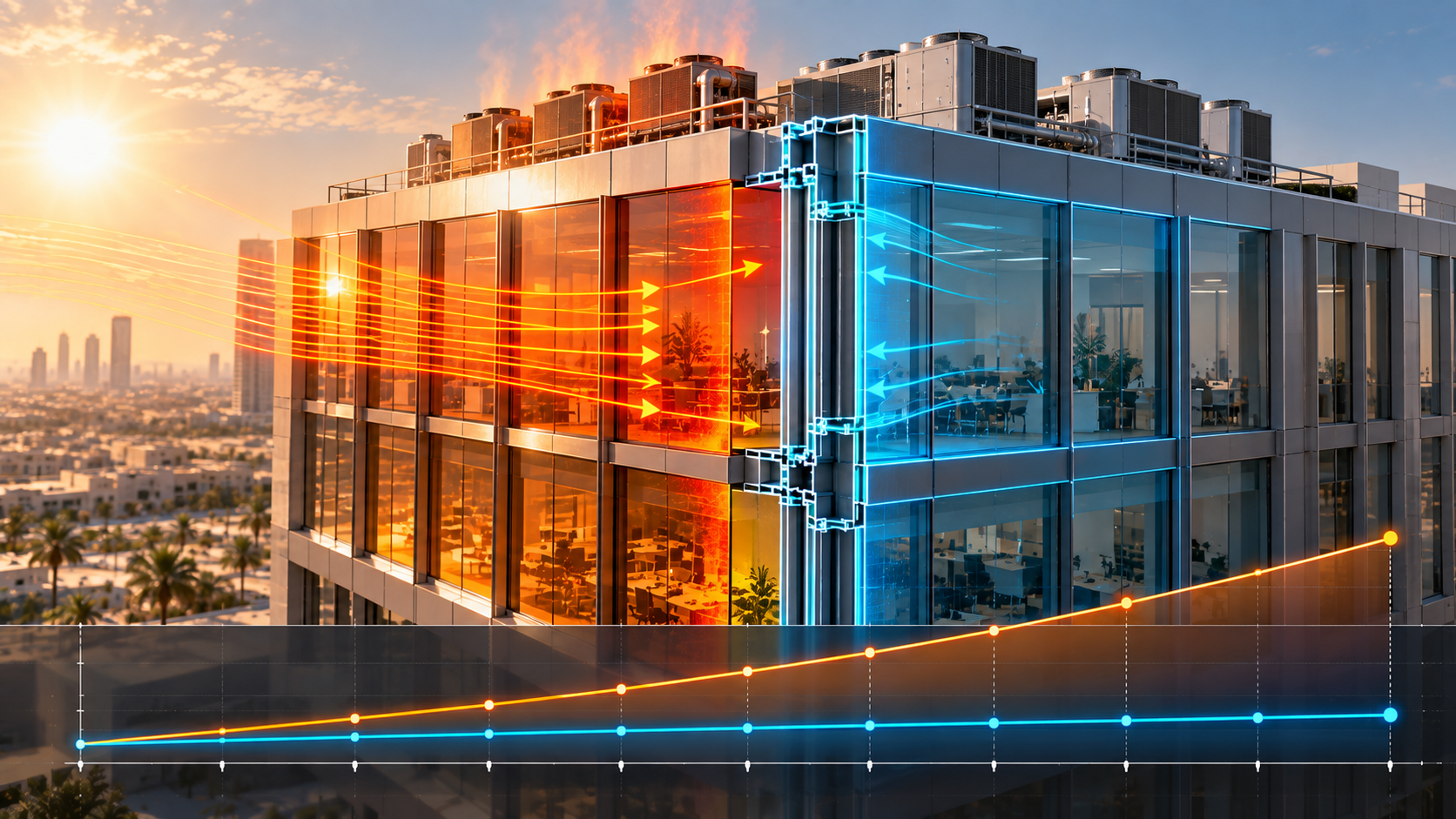
A facade specified to minimize upfront cost, without thermal performance analysis, can end up costing a developer far more over the building’s operating life through elevated cooling demand than it ever saved during construction.
This guide explains the direct link between facade thermal performance and cooling cost under Saudi Arabia’s climate, and how thermal analysis functions as a value-engineering tool rather than an added expense.
How Does Thermal Analysis Reduce Cooling Costs in Saudi Buildings?
Thermal analysis evaluates how much heat a facade design allows into a building, identifying opportunities to reduce heat gain through material, insulation, and glazing choices — directly lowering the cooling load an HVAC system must carry across the building’s operating life.
The Engineering Diagnosis
Facade thermal performance and cooling cost are directly linked: the more heat a facade allows into a building, the harder the HVAC system has to work to maintain comfortable interior conditions, and the higher the resulting energy bill across every year the building operates. In Saudi Arabia’s climate, this relationship is not marginal — facade thermal performance has an outsized effect on cooling demand compared to more moderate climates elsewhere.
Developers optimizing purely for upfront construction cost can end up specifying facade materials, insulation, and glazing that minimize initial spend while maximizing long-term operating cost — a tradeoff that only becomes visible once utility bills accumulate across years of operation, well after the construction decision is locked in.
From Diagnosis to Certainty
This is exactly why thermal analysis functions as value engineering rather than an added cost: a modest upfront investment in evaluating heat gain pays for itself through reduced cooling demand across the building’s entire operating life.
DOME FDH’s Thermal Analysis as Value Engineering
DOME FDH’s thermal analysis service evaluates facade heat gain and identifies where material, insulation, and glazing choices can reduce cooling load — positioning thermal analysis as an investment that pays for itself over the building’s operating life, not a line item that only adds to construction cost.
The Grand Finale
The cheapest facade to build is not always the cheapest facade to own. Thermal analysis makes that tradeoff visible before construction, when adjusting the design still costs far less than living with an underperforming facade for decades.
Ask About Thermal Performance Analysis and see where your facade design can reduce long-term cooling costs.
Engineered FAQ
Does thermal analysis add significant upfront cost to a facade project?
Thermal analysis represents a modest upfront investment relative to the cooling cost savings it can identify across a building’s operating life.
What does thermal analysis actually evaluate?
It evaluates how much heat a facade design allows into the building through material, insulation, and glazing choices, identifying where heat gain can be reduced.
Is thermal analysis especially relevant in Saudi Arabia specifically?
Yes, given Saudi Arabia’s climate, facade thermal performance has an outsized effect on a building’s cooling energy demand compared to more moderate climates.