
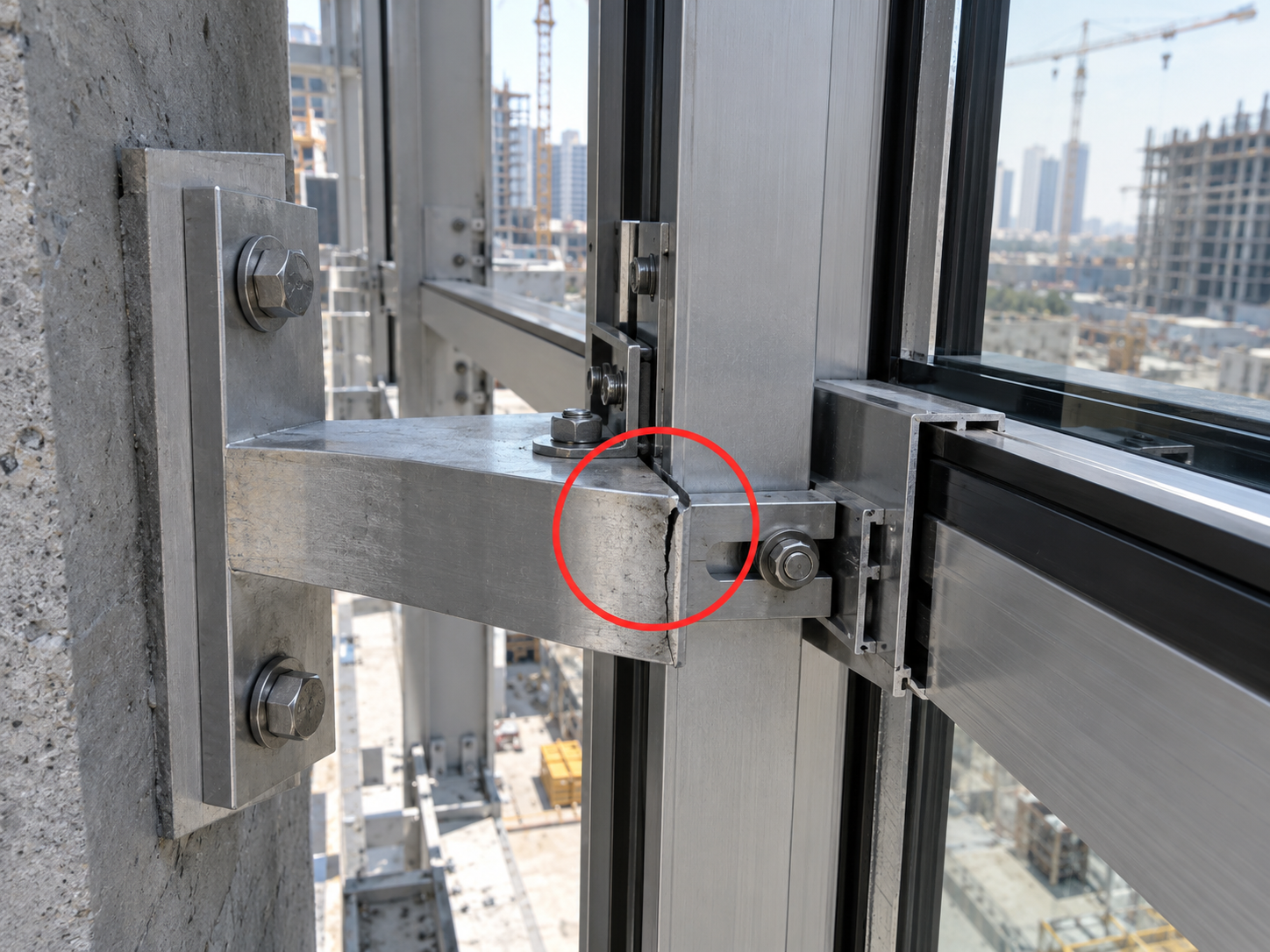
Every one of the five mistakes below has, at some fabricator, turned a profitable order into a break-even one. Cracked corners at the folding table, misaligned brackets discovered mid-installation, glazing pockets that don’t match the specified panel — these aren’t abstract risks. They are recurring, specific failure points in facade shop drawings, and each one has a real cost in wasted material and idle machine time.
This guide names five of the most common shop drawing mistakes precisely — and explains exactly how proper QA/QC catches each one before it reaches your factory floor.
What Are the Most Common Mistakes in Facade Shop Drawings?
The most common facade shop drawing mistakes include incorrect bolt/bracket spacing, missed sealant joint widths, unresolved MEP clashes, inconsistent dimensioning between sheets, and missing fabrication tolerances — each of which can halt production or cause on-site rework.
- Incorrect bracket spacing — compromises the structural connection between the facade frame and the building, often only discovered once fabrication or installation is already underway.
- Missed sealant joint width — leads to water infiltration risk that surfaces long after handover, when it’s far more expensive to fix.
- Unresolved MEP or structural clashes — brackets or fixings that were never checked against other building systems, causing on-site rework.
- Inconsistent dimensioning between sheets — a mismatch between the plan view and the section detail that the factory only catches mid-production.
- Missing fabrication tolerances — drawings that specify a nominal dimension without the tolerance a CNC machine actually needs to produce a usable part.
The Engineering Diagnosis
From Diagnosis to Certainty
None of these five mistakes are inevitable. Every one of them is catchable — provided the drafting office producing the shop drawing has an internal QA/QC process built specifically to check for them before the drawing is released.
DOME FDH’s QA/QC Process — Where These Errors Get Caught
DOME FDH’s shop drawing process includes an internal QA/QC review pass by the on-ground Saudi-based engineering team before any drawing package reaches a client’s factory floor.
This means bracket spacing, joint widths, cross-system coordination, and dimensional consistency are checked as a standard part of the process — not as an optional add-on requested after a problem has already surfaced in production.
The cost of these five mistakes is not hypothetical — it’s measured in scrapped material, idle CNC time, and rework on site. Catching them before a drawing leaves the drafting stage is one of the highest-leverage quality checks in the entire facade fabrication process.
Get a Second Opinion on Your Shop Drawings before they reach your factory floor.
Engineered FAQ
Which shop drawing mistake causes the most expensive rework?
Incorrect bracket spacing is typically the costliest, since it can compromise structural connection points discovered only after fabrication.
Can shop drawing mistakes be caught before fabrication starts?
Yes, through a dedicated internal QA/QC review pass before drawings are released to the factory.
Does DOME FDH offer a review of shop drawings prepared by another office?
Yes, this falls under DOME FDH’s design review services for facade drawings.