
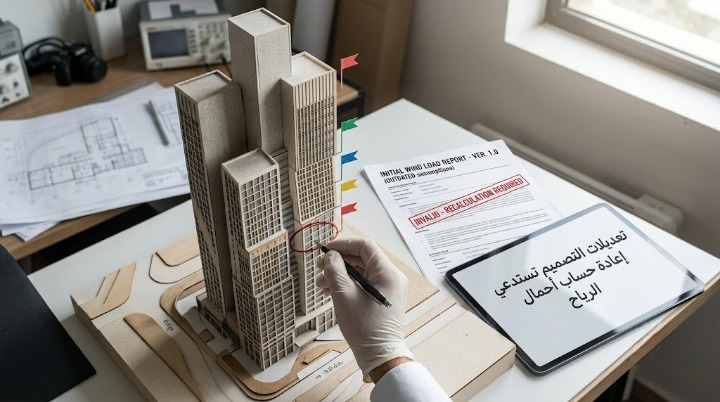
Design teams continuing to reference an early-stage wind load calculation through multiple rounds of design development risk relying on pressure values that geometry or height changes have already invalidated, without anyone flagging that a recalculation was needed.
Why Design Changes Can Invalidate an Existing Calculation
Wind load calculations depend on specific building parameters — height, shape, facade geometry, enclosure configuration. As a project moves through design development, any of these parameters can change, sometimes significantly, from the assumptions used in an earlier wind load calculation. Once a material parameter shifts, the original calculation no longer reflects the actual building being designed.
Where Teams Fail to Recognize the Need for Recalculation
Design teams frequently continue referencing an early wind load report as design development progresses, treating it as a fixed reference point rather than revisiting whether subsequent geometry or height changes have invalidated its underlying assumptions. Because the original report still exists and still looks authoritative, there is no natural trigger prompting the team to check whether it remains valid.
Which Changes Actually Require Recalculation
Material changes that typically invalidate an earlier wind load calculation include:
- Building height changes that shift the structure’s velocity pressure exposure coefficient
- Facade geometry changes that alter zone boundaries or pressure coefficient classifications
- Enclosure configuration changes that affect internal pressure coefficient classification
- Site or surrounding development changes that shift terrain exposure classification
A Safeguard Against Outdated Values Surviving Into Final Design
After identifying which design changes materially invalidate an existing wind load calculation, the fix is making recalculation fast enough that it becomes routine practice at each major design milestone, rather than a burdensome task teams avoid revisiting. Wind Master’s rapid recalculation capability serves as the safeguard against outdated values surviving into a changed design, supporting recalculation at each design development milestone rather than only at the project’s outset.
Validate your current design against original assumptions — Audit for recalculation triggers.