
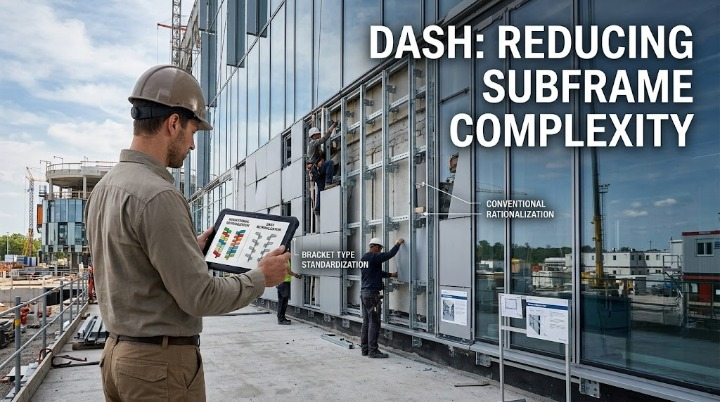
\Structural teams designing subframe systems for facades where panel geometry was rationalized without regard to structural repetition can end up with unnecessary bracket type variety.
Why Panel Rationalization Affects Subframe Design Downstream
Decisions made during facade panel rationalization directly affect the structural subframe supporting those panels — if panel geometry varies without any consideration for structural repetition, the resulting subframe must accommodate that same variety, often requiring a wider range of bracket types than a more structurally-considerate rationalization would have produced.
Where This Downstream Effect Gets Overlooked
A rationalization process focused purely on panel-level optimization, without evaluating how panel geometry choices cascade into subframe bracket variety, can produce a facade that looks efficient at the panel level while creating unnecessary complexity in the structural system supporting it.
Why This Compounds Across the Facade’s Connection Points
Unnecessary bracket type variety does not just add engineering complexity once — it repeats across every connection point on the facade, meaning a rationalization decision that ignores structural repetition compounds its cost across the entire structural subframe system.
Considering Structural Repetition as Part of the Panelization Strategy
After connecting panel rationalization decisions to their downstream effect on subframe bracket variety, DASH’s facade rationalization process considers structural repetition as part of the panelization strategy, reducing the unnecessary bracket variety that panel-only optimization would otherwise create.
Consult with DASH’s team about the structural impact of your facade rationalization.