
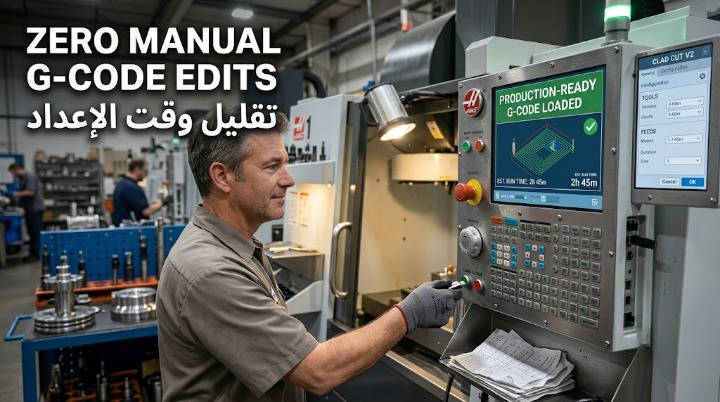
CNC operators manually editing G-code for each job introduce errors and reduce productive machine time per shift.
Why Manual G-Code Editing Consumes Non-Productive Time
Preparing G-code for a specific job often requires manual adjustment — origin offsets, tool assignments, feed rate corrections — before the program is ready to run on the specific machine. This editing time, performed manually for every job, is time the machine is not cutting, representing a direct reduction in the shift’s available productive capacity.
Where Manual Editing Introduces Additional Risk
Beyond the time cost, manual G-code editing introduces the possibility of a transcription or configuration error entering the program — a mistake that may not become apparent until the machine actually attempts to run the incorrectly edited code, potentially causing a cutting error or machine fault.
Why This Cost Recurs on Every Single Job
Because manual G-code editing happens fresh for each new job, the time cost and error risk it introduces are not a one-time setup cost but a recurring tax on every job processed — meaning the cumulative impact across a shift, or a month of production, can be substantial.
Generating Production-Ready G-Code With Zero Manual Edits
After cataloging the manual G-code editing steps that waste operator time, the fix is generating machine-specific G-code automatically with correct parameters already applied, eliminating the manual editing step entirely. Clad Cut V2’s machine-specific post-processor generates production-ready G-code with correct parameters, requiring zero manual edits and recovering the time and reducing the error risk manual editing otherwise introduces.
Standardize your G-code output — Configure Clad Cut V2 for your CNC machine.