
Every late-stage design revision forces a manual redraw cycle that falls further behind an actively evolving design with each additional change the project requires — a lag that compounds rather than stabilizes as a project progresses.
Why Manual Redraw Cycles Cannot Keep Up With Active Design
When shop drawings are produced manually, each design revision requires a drafter to manually update the affected drawings to reflect the new design state. If revisions arrive faster than manual redraw capacity can process them, the drawing set falls progressively further behind the design’s actual current state — a gap that widens rather than closes as the project continues.
Where This Lag Becomes a Real Project Risk
A drawing set that has fallen behind the current design state creates genuine risk if fabrication or construction proceeds based on drawings that no longer reflect the design’s latest revisions. The team working from an outdated drawing set may not even be aware that a more recent design change exists, if drawing updates have not caught up to communicate it.
Why This Problem Compounds on Fast-Moving Projects
Projects with an actively evolving design — common during design development or when late-stage changes are still being incorporated — are precisely where manual redraw capacity is most likely to fall behind, because the volume of revisions requiring drawing updates increases exactly when the team has the least capacity to keep pace manually.
Regenerating Drawings Directly From the Current Model State
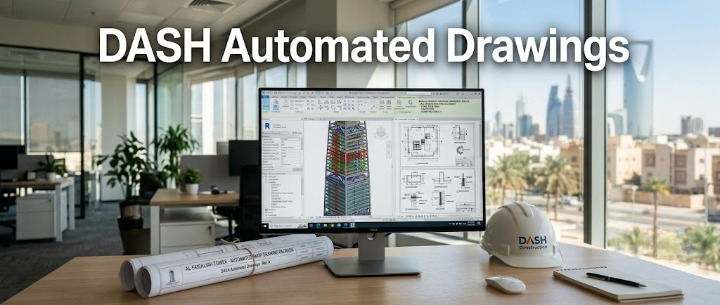
After showing how manual redraw cycles fall behind an actively evolving design, the fix is generating shop drawings directly from the model’s current state on demand, rather than relying on manual redraw capacity to keep pace with revision volume. DASH’s automated shop drawing extraction regenerates drawings directly from the current model state, closing the lag that manual redraw cycles otherwise accumulate.
Consult with DASH’s team about keeping your drawing set current.