
There is no sight more unsettling for a factory manager than watching waste bins fill up weekly with “scrap” resulting from cutting aluminium panel composite. This waste is not merely an environmental burden; it is a direct hemorrhage of your profits. Every offcut discarded was already paid for based on the high aludecor acp sheet price (4mm).
The guilt associated with this Excessive Waste is entirely justified, as those dumpsters are essentially “filled with cash” that was never utilized. The defining difference between traditional fabrication shops and smart factories in 2026 is the ability to minimize waste and transform scrap into a measurable profit margin. Discover smart nesting techniques that turn scrap into profit. Get the whitepaper.
5 Ways to Reduce Composite Panel Waste
Modern factories use waste reduction software to turn scrap into profit margins. According to the CladCut resource sustainability protocol, here are five engineering methods to minimize composite panel waste:
- Algorithmic Nesting: Utilizing intelligent interlocking algorithms to distribute parts on the sheet with maximum density, reducing inter-panel gaps to their absolute limits.
- Edge-to-Edge Optimization: Adjusting cutting parameters to fully utilize the outer edges of the sheet, minimizing longitudinal offcuts.
- Remnant Management: Documenting offcuts with unique identification numbers and re-entering them into the system for use in smaller projects instead of disposal.
- Mechanical Separation for Recycling: Implementing mechanical methods to separate aluminum from polyethylene to ensure high-purity raw material recovery rather than polluting incineration.
- Life Cycle Costing (LCC): Analyzing the economic and environmental costs of waste to make procurement decisions based on sheet dimensions that achieve the highest Yield.
Engineering Diagnosis: The Science of ACP Waste Management
According to Life Cycle Assessment (LCA) studies (referencing ScienceDirect, 2025), aluminum and polyethylene are the primary components representing the largest environmental and economic burden in aluminium panel composite manufacturing. In major aluminium metal cladding projects, raw materials account for 40% to 60% of total costs.
Relying on traditional alco panel systems without toolpath optimization inevitably increases both the carbon footprint and financial waste. Scientific research confirms that recycling waste through Mechanical Separation far outperforms incineration methods, which oxidize the aluminum and pollute the environment. Therefore, Technical Certainty in waste management has become a foundational pillar for both sustainability and profitability in the modern industrial landscape.
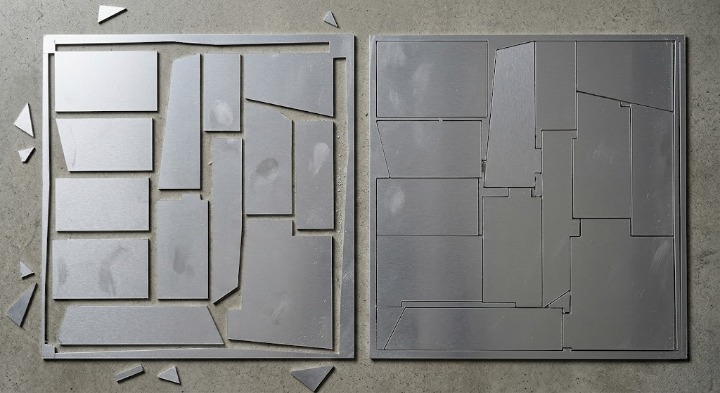
[Image Placeholder: A side-by-side comparison showing a traditional cutting layout with scattered waste vs. an AI-optimized nesting layout with 99% sheet utilization.]
Empty Your Dumpster with Intelligent Nesting
High-value scrap in a dumpster is a failure of engineering logic. To maintain market sovereignty, you must transition from “estimating” waste to “engineering” its elimination. Every millimeter saved is a millimeter of profit reclaimed.
That dumpster is full of cash. Empty it by optimizing your nesting layout. Modern factories use waste reduction software to turn scrap into profit margins. (Note: Implementing CladCut’s nesting core is the most direct path to reclaiming your raw material budget.)
Product Deep Dive: CladCut – The Mastermind of Waste Reduction
At DomApp, we don’t just provide “unfolding” tools; we engineer Resource Efficiency through CladCut. Functioning as a specialized waste reduction software, CladCut analyzes your current inventory of full sheets and documented remnants to find the perfect geometric fit.
The Return on Investment (ROI) is instantaneous: CladCut raises your Yield to 99%, saving massive amounts annually by reducing the volume of purchased raw material. By treating scrap as a digital asset to be managed rather than a byproduct to be discarded, CladCut ensures your investment in software pays for itself within the first major aluminium panel composite project. We provide the Technical Certainty needed to ensure that what you buy is exactly what you use.
Turn Your Scrap into Liquid Cash
Waste is the silent enemy of profit. In 2026, successful factories are those that manage every millimeter of raw material with digital intelligence. Do not allow your hard-earned profits to end up in a landfill; it is time to reclaim the value of every sheet you purchase.
Download Waste Reduction Guide (Get your comprehensive guide now and discover how smart nesting algorithms can transform scrap into additional profit margins with CladCut).
Engineered FAQ
Why is direct disposal of aluminium panel composite waste a mistake?
Because the scrap contains aluminum and polyethylene that can be mechanically recycled or repurposed in other products like cement concrete, significantly reducing the social and environmental cost of waste.
How does waste reduction software improve ROI?
By reducing the amount of raw material purchased for each project by up to 20%, cutting order processing time, and ensuring the precise utilization of documented offcuts.
What is the best scientific method for recycling facade waste?
Mechanical separation. This involves crushing the panels and separating the aluminum from the plastic using gravity or electrostatic forces, a method that ensures the highest recovery value for the materials.