
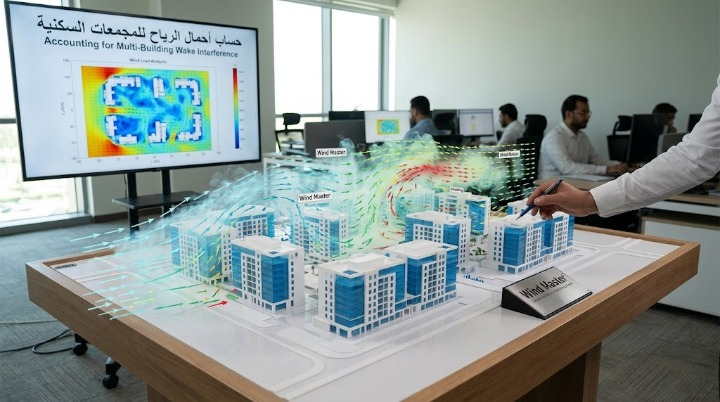
Calculating wind loads for each building on a multi-building site plan in isolation ignores wake interference and shielding effects that adjacent structures create on one another — a factor frequently left out of single-building calculations.
Why Adjacent Buildings Change Each Other’s Wind Exposure
Buildings on the same site plan do not experience wind in isolation from one another. An upwind building can shield a downwind structure from direct wind pressure, or it can create wake turbulence that amplifies pressure on a downwind building in ways a standalone calculation would not predict. This building-to-building interaction is a genuine structural consideration on multi-building sites, not a minor secondary effect.
Where Single-Building Assumptions Break Down
Engineers calculating wind loads for a multi-building development frequently treat each building as an independent structure, applying standard exposure and pressure assumptions without evaluating how the specific arrangement of buildings on that site plan affects wind flow between them. This produces a calculation that would be correct for a standalone building on an open site, but potentially inaccurate for the same building positioned within a cluster of other structures.
Why This Gap Is Easy to Overlook
Because each individual building’s calculation looks complete and internally consistent when reviewed on its own, the omission of site-wide interaction effects does not produce an obviously incomplete-looking deliverable. It requires someone to specifically evaluate the site plan as a whole, rather than reviewing each building’s wind load report independently.
Accounting for Site-Specific Building Interaction
After explaining how adjacent buildings alter wind pressure through shielding and wake effects, the fix is evaluating the site plan holistically rather than treating each building as an isolated calculation. Wind Master accounts for site-specific building interaction within a multi-building project, incorporating shielding and wake interference considerations rather than defaulting to standalone-building assumptions for structures that will actually be sited near one another.
Validate your site-wide wind analysis — Audit for building interaction effects.