
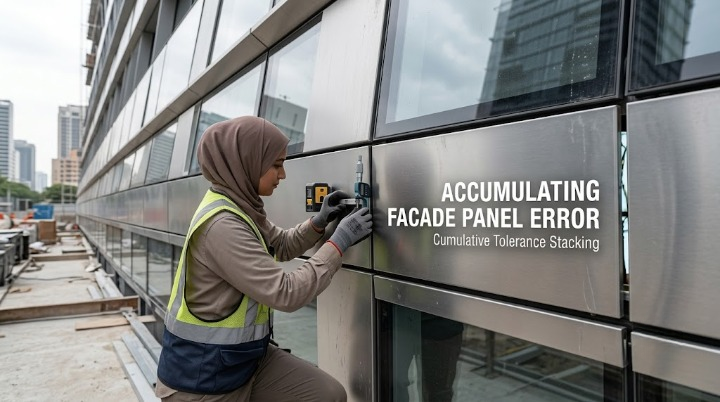
Facade teams verifying that each individual panel tolerance falls within specification, without accounting for how tolerances stack cumulatively across a long facade run, can encounter fit failures at the installation endpoint.
Why Individually Acceptable Tolerances Can Still Compound
Each panel in a facade run may individually fall within its specified tolerance range — a small, acceptable deviation. Across a long run of many panels, however, these individually acceptable deviations can accumulate in the same direction, producing a cumulative deviation at the end of the run that exceeds what any single panel’s tolerance would suggest is possible.
Where This Compounding Effect Gets Missed
Verifying panel tolerance on a panel-by-panel basis, without modeling how these tolerances stack across the full run, can miss this cumulative effect entirely — each individual check passes, while the aggregate effect across the run produces a genuine installation problem.
Why This Surfaces Specifically at Installation
A tolerance stacking problem typically remains invisible until installation, when the physical fit at the far end of a facade run reveals a cumulative deviation that individual panel-by-panel tolerance checks never flagged.
Modeling Cumulative Tolerance Stacking Rather Than Isolated Panels
After explaining how individually acceptable tolerances compound across a panel run, DASH’s facade rationalization process models cumulative tolerance stacking rather than evaluating panels in isolation, addressing the compounding effect that panel-by-panel verification alone would miss.
Consult with DASH’s team about your facade tolerance strategy.