
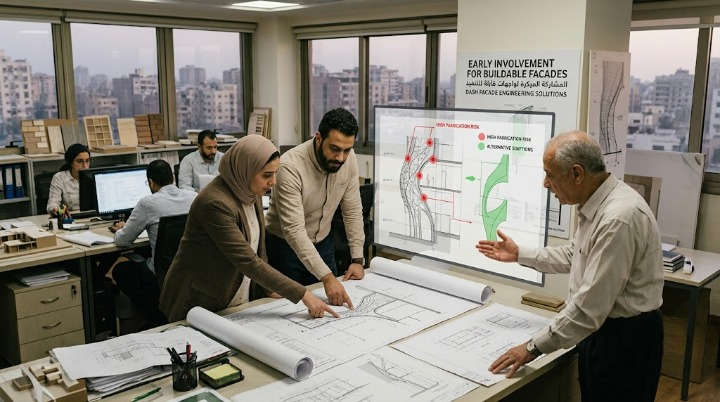
Design teams finalizing design development geometry before any facade rationalization review has occurred convert rationalization into damage control rather than an input to the design process itself.
Why Timing Determines Whether Rationalization Can Influence Design
Facade rationalization review conducted before design development is finalized can genuinely inform design decisions — flagging where a proposed geometry creates fabrication challenges while the design is still flexible enough to adjust. The same review conducted after finalization can only identify problems in a design that has already been locked in.
Where Late Involvement Limits What Rationalization Can Achieve
If rationalization review only occurs once design development is complete, any issues it identifies must be addressed through late-stage design changes — a far more disruptive and costly process than if the same issues had been surfaced while the design was still being actively developed.
Why Early Involvement Changes Rationalization’s Role Entirely
Rationalization review performed early becomes a genuine input to design decisions, helping shape a design that is both architecturally intended and practically fabricable from the outset — rather than a late check that can only flag problems in an already-finalized design.
A Service Best Engaged Before Design Development Is Finalized
After illustrating how early rationalization review can influence decisions before they become costly to reverse, DASH’s facade engineering solutions are best engaged before design development is finalized, positioning rationalization as a design input rather than a post-finalization correction exercise.
Consult with DASH’s team before finalizing your design development.