
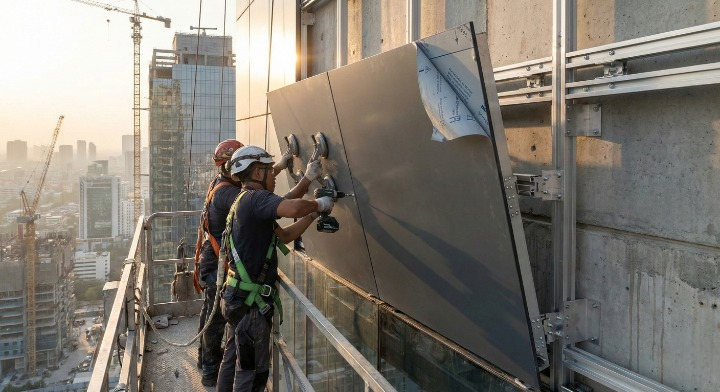
The Importance of Fixing Systems in Aluminum Composite Panel Applications
Fixing systems play a crucial role in the successful application of Aluminum Composite Panels (ACP) across various projects. They are not merely tools for securing panels in place but also have a direct impact on the overall performance, durability, and aesthetics of buildings. With the increasing use of ACP in Saudi Arabia, selecting the appropriate fixing system has become essential for achieving the best results.
How Do Fixing Techniques Affect Performance and Quality? Fixing techniques significantly influence the final appearance, strength, and longevity of ACP installations. Choosing the right technique enhances load resistance, weather durability, and ease of maintenance over time. Advanced fixing systems also contribute to better thermal efficiency and reduced energy loss, making them more sustainable and efficient.
What Are Aluminum Composite Panel Fixing Systems?
1.1.1 Fixation methods
Starting with some general information on JOINTING / FIXING TECHNIQUE:
-
Thermal expansion: install ACP panels to avoid tension caused by thermal expansion. For instance, ACP panels expand 2.4mm per meter length for every 100°C temperature increase.
-
Rivets and screws: They should be installed loosely to avoid tension.
-
Hole size: Holes in the panels need to be big enough for the panels to expand without creating tension.
-
Drilling: Use jigs to ensure holes are centered for rivets and screws.
-
Protective film: Remove protective film around the rivet or screw head before installation.
Types of Aluminum Composite Panel Fixing Systems
1. Mechanical Fixing Systems: Sub-categories and Applications
Mechanical fixing systems use screws, bolts, and fasteners to secure ACP panels. They are commonly used in high-load environments requiring strong resistance to wind pressure and heavy loads.
Common Sub-categories in the Market:
-
L-angle system: The most basic method using L-angles to attach the panel to the subframe. It uses pop rivets to attach the angle to the panel and self-drilling screws for the subframe assembly.
-
Hock system: Works by creating a hock cutout in the panel and hocking it onto an aluminum profile fixed to the substructure or a rail and runner system.
-
Brief Comparison: While the L-angle system is cost-effective and straightforward for standard installations, the Hock system provides superior precision and a cleaner aesthetic by allowing for more controlled panel alignment.
2. Adhesive Fixing Systems: How They Work and Their Benefits
Adhesive fixing systems use specialized adhesives to bond ACP panels to structures. These systems offer quick and easy installation while maintaining a clean, seamless appearance without visible screws or bolts.
3. Hidden Fixing Systems: Advantages and Applications
Hidden fixing systems rely on concealed fasteners to provide a modern and sophisticated look. They are typically used in premium commercial buildings and luxury architectural projects.
Introduction to Solid Aluminum Panels
Solid Aluminum Panels are industrial sheets made of high-quality aluminum layers, used in various industrial and commercial applications. They are designed to enhance durability and thermal efficiency, making them ideal for construction and insulation.
Physical and Chemical Properties of Aluminum:
-
Lightweight: Facilitates easy installation and reduces structural load.
-
Durability: Resistant to environmental factors such as rust and corrosion.
-
Reflective Ability: Aluminum surfaces reflect thermal radiation, reducing heat transfer.
Types of Solid Aluminum Panels: These consist of a single, high-strength aluminum layer that provides exceptional durability and reflective properties, making them a premium choice for high-performance building envelopes.
Installation and Technical Details
RIVETING
When riveting, weather conditions should be taken into consideration.
-
For outdoor use or high humidity: Opt for aluminum blind rivets with stainless steel mandrels to avoid rust stains.
-
Mandrel types: If using aluminum rivets with steel mandrels, choose a detachable version where the mandrel falls out after installation.
THREADED FASTENERS (Screws on metal substructures)
Stainless steel screws are used to attach metal panels to metal substructures.
-
Watertight seal: Use a torque wrench to tighten just enough to compress the rubber washer against the panel.
-
Avoid overtightening: Squeezing the panel can prevent proper expansion and contraction, causing the panel to bend.
Fixation panels using gluing
-
Safety: Most importantly, if the glue fails, nobody should get hurt by falling facade pieces.
-
Stiffeners: The use of OMEGA shaped stiffeners is recommended for transferring forces to the underlying structure.
How to Maintain the Efficiency of Aluminum Panels?
Regular Maintenance
Clean panels regularly and repair minor damages as soon as they appear.
Use Suitable Cleaning Materials
Avoid abrasive chemicals that could affect the reflective properties of aluminum.
Protect from External Factors
Ensure aluminum is not exposed to corrosive materials to preserve insulation effectiveness.
Frequently Asked Questions (FAQs)
-
What Are the Best Fixing Systems for Residential Buildings? Adhesive or hidden systems are preferred for aesthetic appeal and ease of installation.
-
Can the Same Fixing System Be Used in All Environments? No, fixing systems should be chosen based on climate conditions and project requirements.
-
Are Solid Aluminum Panels resistant to rust? Yes, especially when treated with anti-corrosion coatings.