
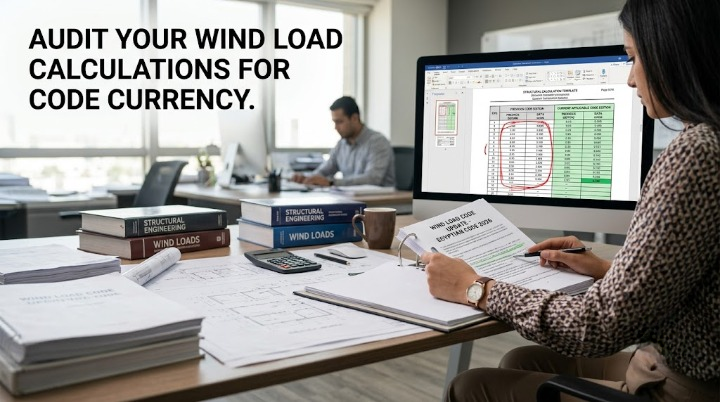
Engineering teams continuing to reference calculation templates built on a superseded code edition remain unaware that a provision has changed until a municipality reviewer flags the discrepancy.
Why Code Editions Do Not Stay Static
Wind load codes are periodically revised, with specific provisions updated, clarified, or replaced between editions. A calculation template built and validated against one edition does not automatically remain correct once a newer edition becomes the applicable code for current projects — even if the template’s general structure and formulas still look reasonable.
Where Superseded Templates Persist in Practice
Engineering teams that have relied on a particular calculation template for multiple past projects can continue using that same template into new projects without necessarily verifying that every provision it relies on still matches the currently applicable code edition, especially if the template has not needed obvious changes for other reasons.
Why This Gap Surfaces Late in the Process
A calculation built on a superseded provision does not look incomplete or obviously incorrect — it follows a logically consistent method that was correct under a previous edition. The gap typically becomes visible only when a municipality reviewer, working from the current code, identifies that a specific provision applied in the submittal no longer matches what the current edition requires.
Built on the Current Applicable Code Edition
After explaining how superseded code editions create compliance risk that surfaces late in the review process, the fix is anchoring every calculation to the current applicable code edition by default, rather than relying on a template’s continued use as an indicator that it remains valid. Wind Master’s automated engine is built on the current applicable code edition, reducing the risk of a superseded provision surfacing only once a reviewer catches the discrepancy.
Validate your code edition — Audit your calculation templates for currency.