
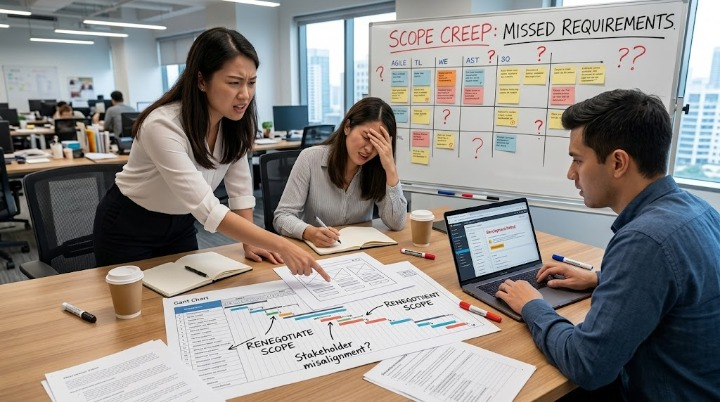
Founders eager to start development immediately, skipping a structured requirements discovery phase, frequently face mid-project scope renegotiation once stakeholder assumptions turn out to have diverged from the project’s actual starting point.
Why Discovery Feels Skippable But Rarely Is
A structured requirements discovery phase can feel like a delay when a founder is eager to see development begin. This impatience is understandable, but discovery serves a genuine purpose: surfacing assumptions and expectations that different stakeholders hold, before those assumptions are built into a development plan that later needs to be renegotiated once the divergence becomes apparent.
Where Skipped Discovery Resurfaces as Conflict
Projects that begin development without a thorough discovery phase often proceed smoothly at first, since initial features tend to be less ambiguous. The gap becomes visible partway through, when a feature reveals that different stakeholders held different assumptions about how it should behave — assumptions that discovery would have surfaced and reconciled before development time was invested in a specific interpretation.
Why Mid-Project Renegotiation Is More Costly Than Upfront Discovery
Renegotiating scope mid-project requires unwinding whatever assumptions were baked into work already completed, potentially requiring rework, and introduces friction between the founder and development team at a point where trust and momentum matter most. The time discovery would have taken upfront is almost always less than the time mid-project renegotiation ends up costing.
Treating Discovery as a Mandatory First Phase
After tracing how skipped discovery phases resurface as mid-project scope conflict, the fix is treating requirements discovery as a mandatory first phase rather than an optional step that can be skipped under schedule pressure. DomApp’s Adaptive Agile Development process treats requirements discovery as a mandatory first phase, surfacing stakeholder assumption divergence before it becomes baked into development work that later needs revisiting.
Consult with DomApp’s team about a proper requirements discovery phase.